Capital One · 2025
Overrides
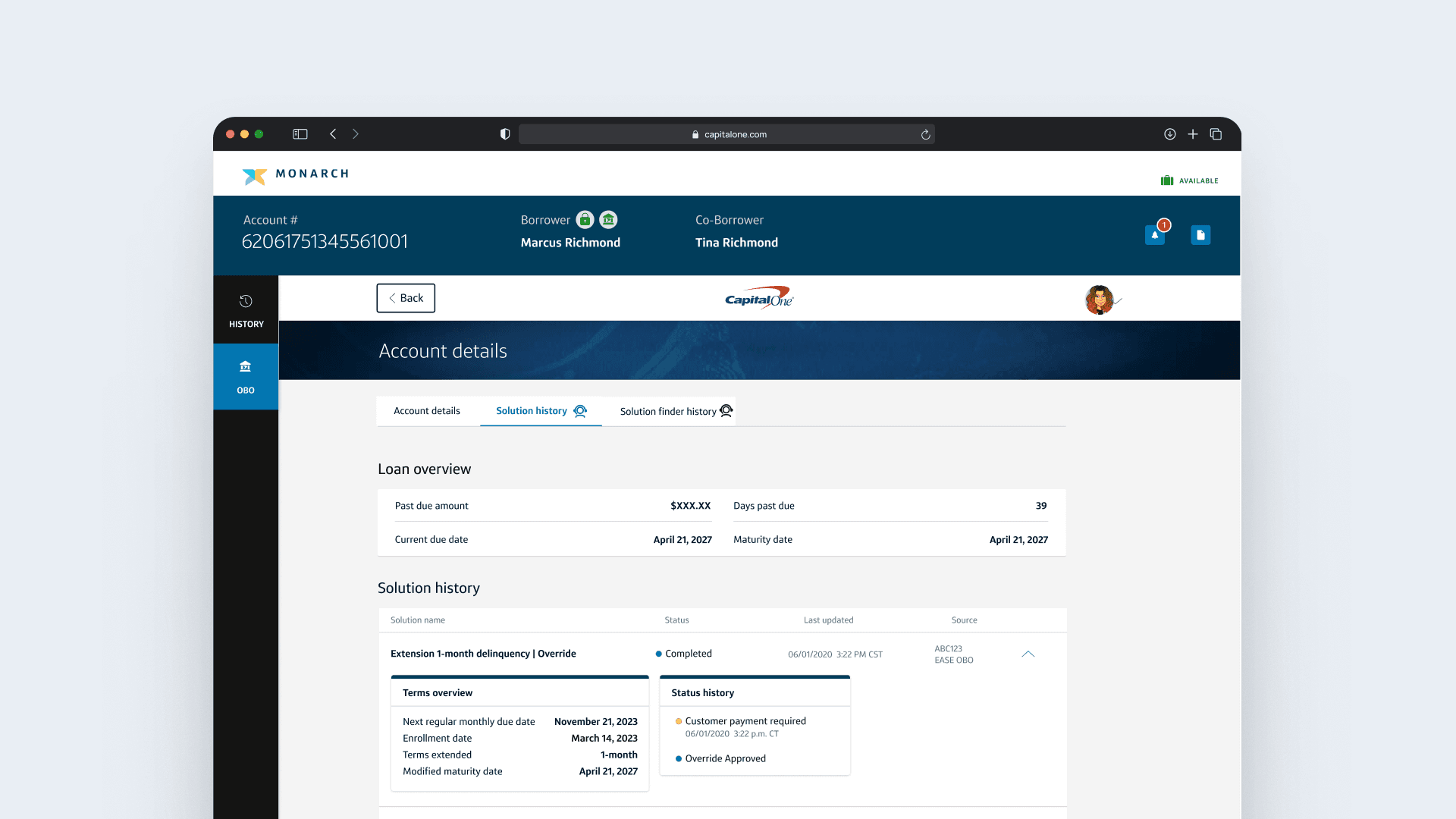
A broken internal process. A junior designer who needed a leader, not a reviewer.
The Overrides feature was the third piece of Capital One's Help Me Catch Up experience — focused on the hardest edge case: customers who needed a loan extension but didn't automatically qualify. These cases required a human override, a judgment call made by an escalation manager weighing account history and context.
This project had two layers running in parallel. The first was a product problem: phone agents were reconstructing eligibility from memory every single time, with no consistent reference. The second was a leadership problem: a junior designer on my team owned this work, and my job was to make sure she could deliver it — not do it for her.
What This Project Was Really About
Building a tool that made human judgment more consistent — and developing a designer who could navigate a complex, compliance-heavy environment without losing confidence in her craft.
Every override decision was a guess. The cost was inconsistency at scale.
When a customer called in for a loan extension override, the agent on the line had to manually review account history, recall policy rules, and make a judgment call — all from institutional knowledge held in their head. There was no system. There was no panel. There was just memory.
Escalation managers received override requests with no pre-populated context. They were making decisions blind, often following up with agents to get information that should have been in front of them from the start.
The result: delays that frustrated customers already in hardship, inconsistent outcomes across agents, and escalation teams spending time chasing context they shouldn't have had to chase.
I coached the designer. She designed the product.
My role on this project was to guide rather than execute. The junior designer owned the design work — every wireframe, every critique response, every stakeholder presentation. My job was to be the thinking partner who helped her see what she already knew but hadn't articulated yet.
Leadership Approach
Structured critique sessions at each major milestone — not to tell her what to change, but to ask the questions that helped her identify it herself. When she got blocked on the eligibility matrix, I mapped the logic with her, then stepped back. When the design was strong, I said so explicitly. Naming what's working is as important as naming what isn't.
The compliance and eligibility constraints on this project were dense — credit rules, 12-month extension windows, account status conditions. I sat with governance and legal alongside her so she understood the constraints firsthand, not filtered through me.
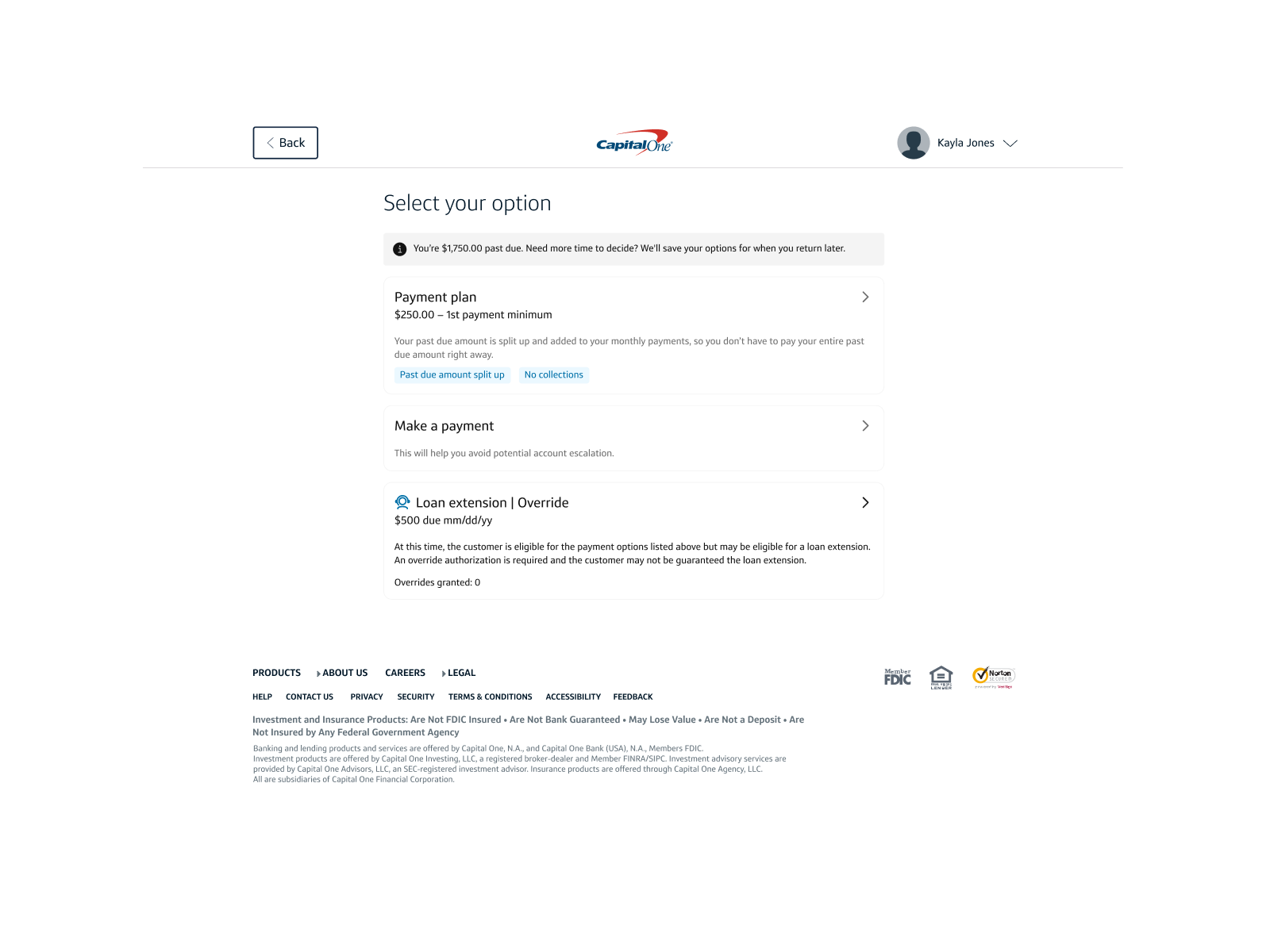
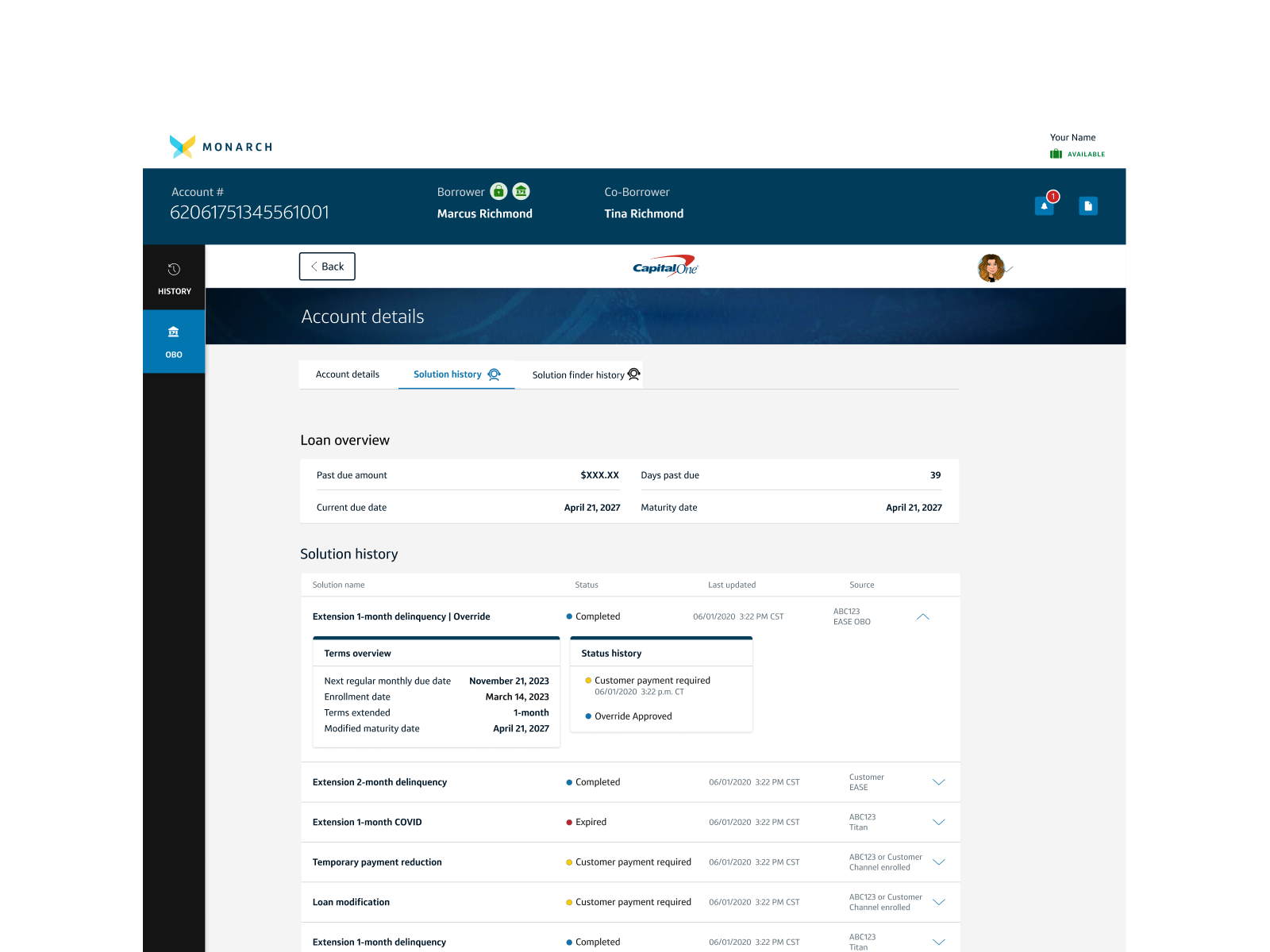
One panel. Everything the agent needed to make the call.
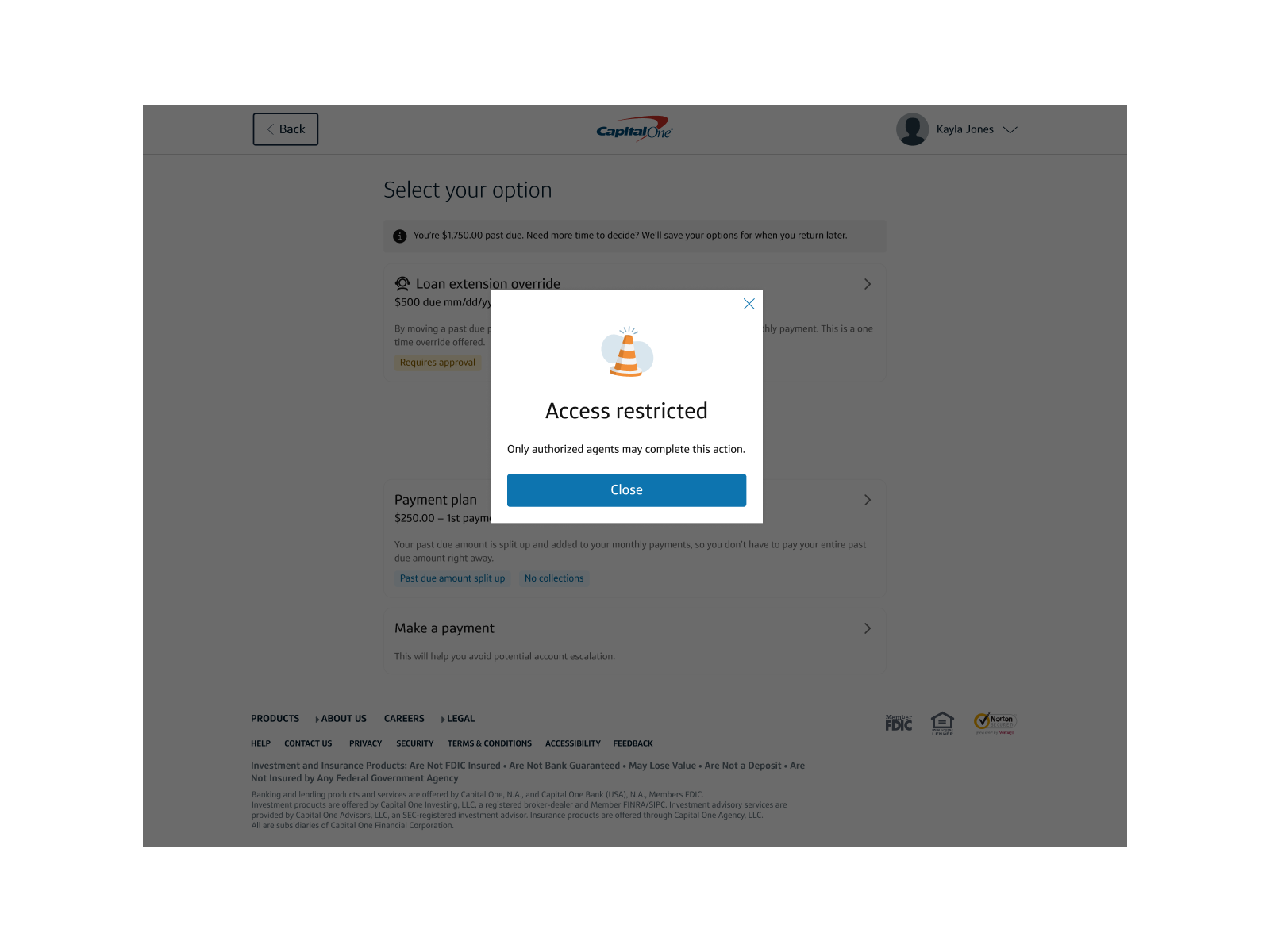
The solution added a dedicated eligibility view inside Capital One's existing back-end agent tool. It surfaced a customer's override eligibility — account history, past extension count within a 12-month window, qualification status — in a single scannable panel, pre-loaded when the agent pulled up the account.
Agents no longer reconstructed the picture from scattered sources. Escalation managers received override requests with all relevant context already populated. The signal was clear. The decision was still human.
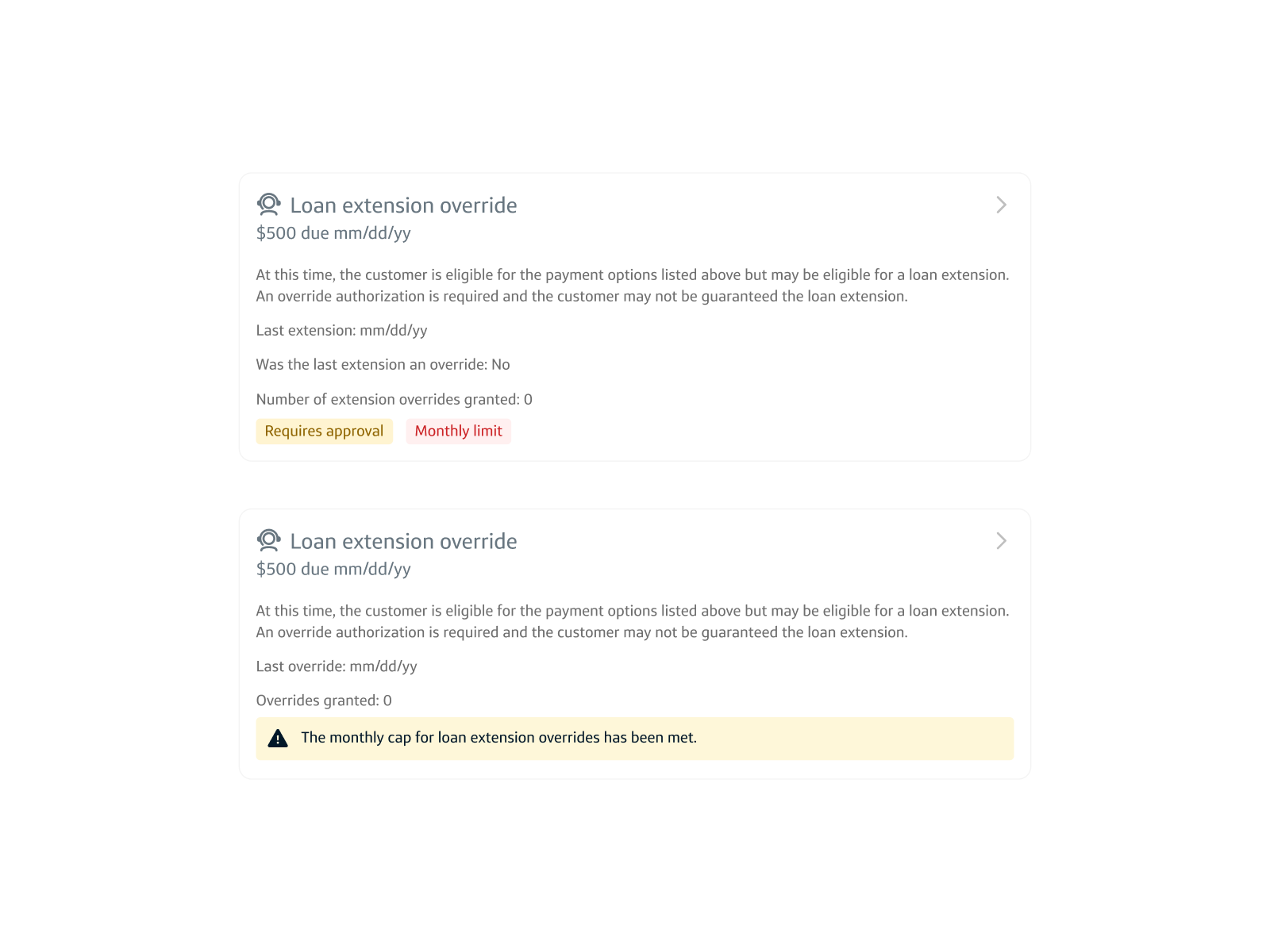
Faster resolutions. A more consistent process. A designer who earned her confidence.
The feature resolved a long-standing bottleneck in the escalation workflow and gave agents a consistent, auditable reference point for every override decision.
The Outcome I'm Proudest Of
The junior designer who owned this project delivered one of her strongest pieces of work to date — and left the engagement with more confidence in her process, her instincts, and her ability to navigate a complex, stakeholder-heavy environment. That is a design outcome too.
Next Project
Moneda · 2024
AI Chat for Payments
Designed an AI payments assistant for the unbanked.
