Openfit · 2021
Express Checkout & Churn Prevention
Revenue was leaking from two places at once. Acquisition and retention — both broken.
At Openfit I worked across two high-impact initiatives simultaneously: a checkout redesign to recover lost conversions at the payment step, and a cancel-prevention flow to interrupt subscription churn before it finalized. Both were revenue problems. Both required different design thinking.
Users were dropping off at checkout and walking out the back door — with nothing to stop them.
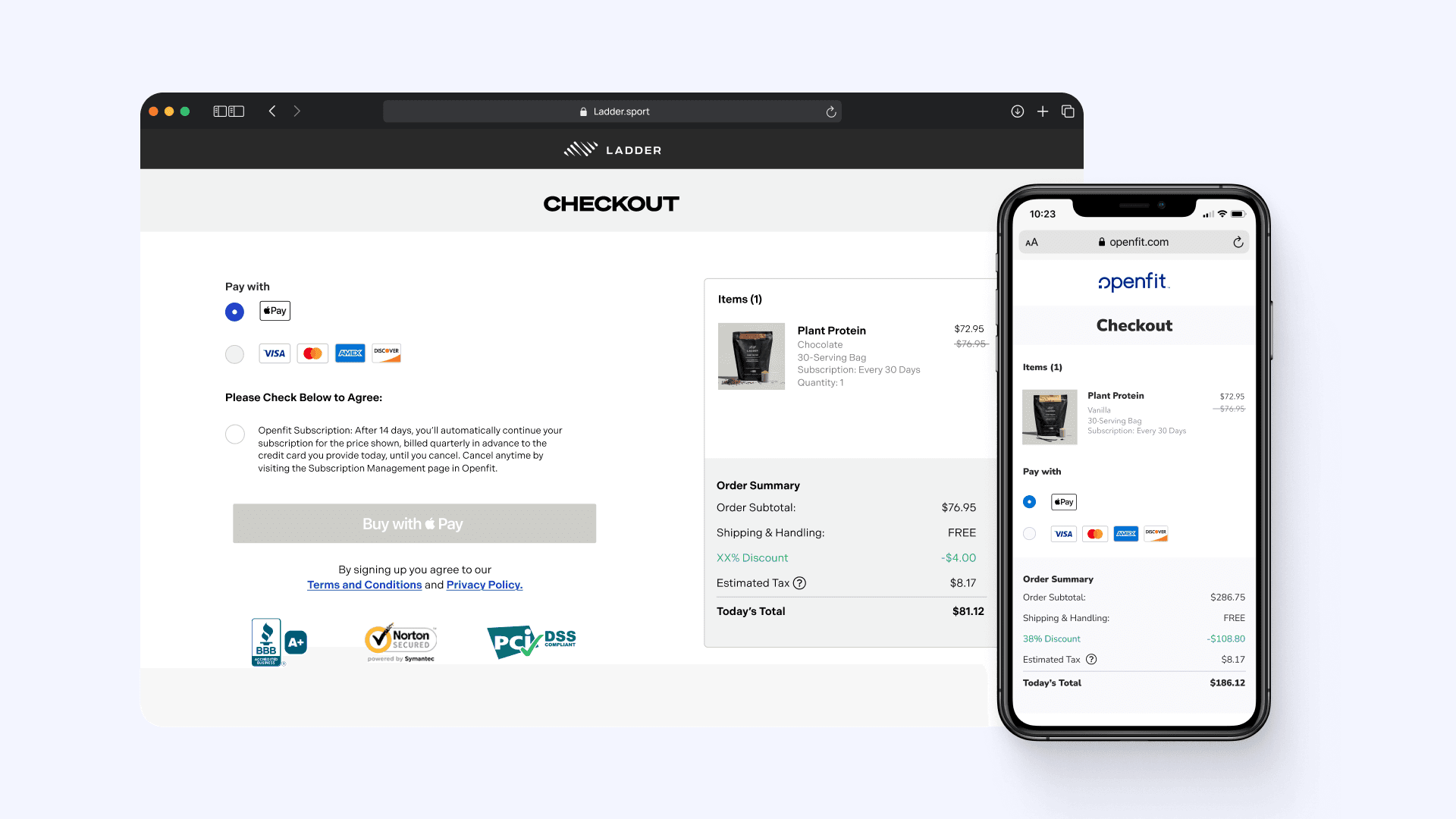
Cart abandonment at the payment step wasn't a motivation problem — users wanted the product. It was a friction problem. The checkout experience didn't match the speed and convenience standard users expected, and the gap cost conversions.
The Retention Gap
Subscription churn was a different failure mode entirely. Users who had paid, onboarded, and used the product were leaving — and there was no intentional design moment to interrupt that decision before it became final. The product had no mechanism to give them a reason to stay.
Two hypotheses. One A/B test. One answer that surprised us.
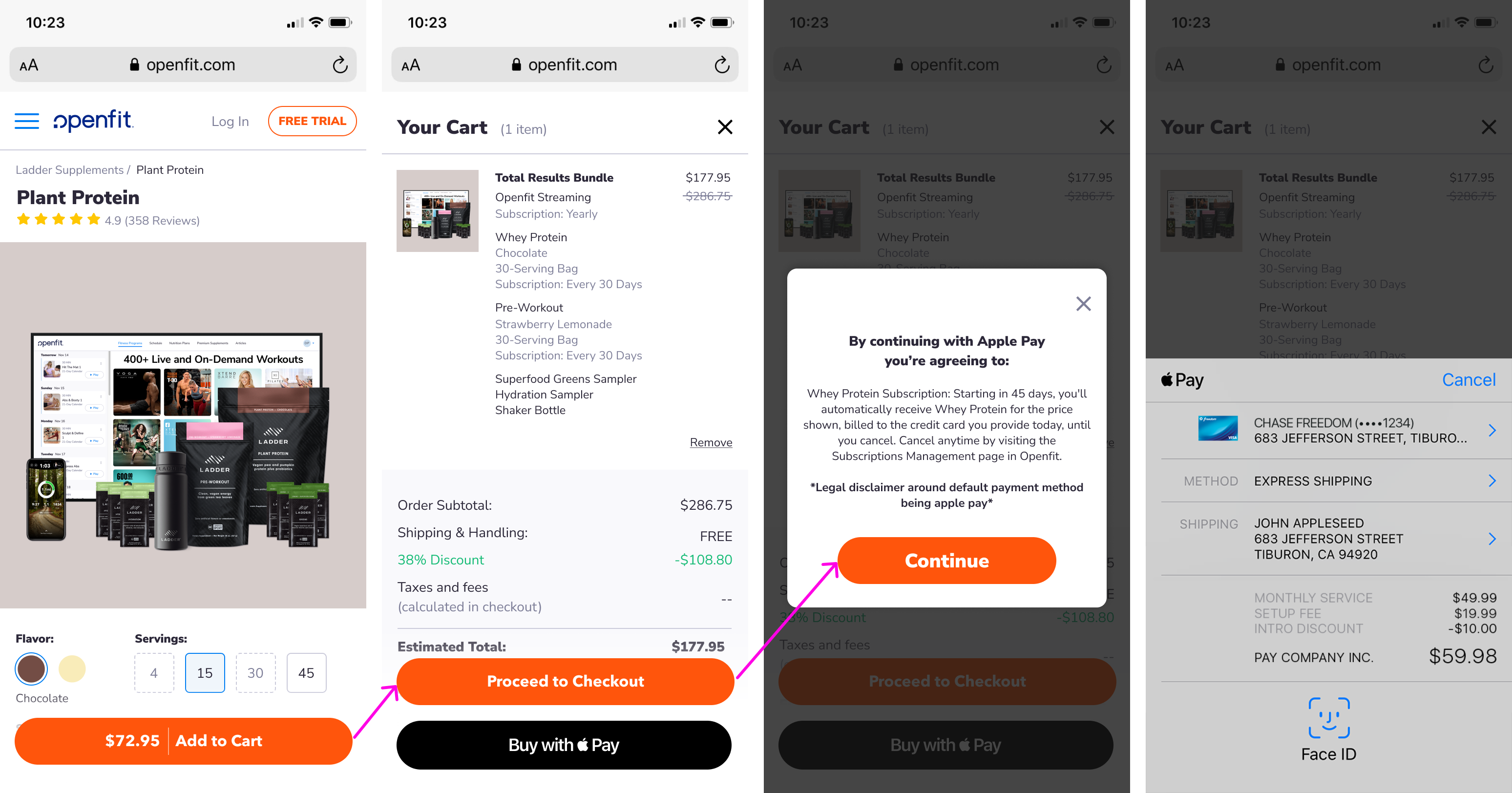
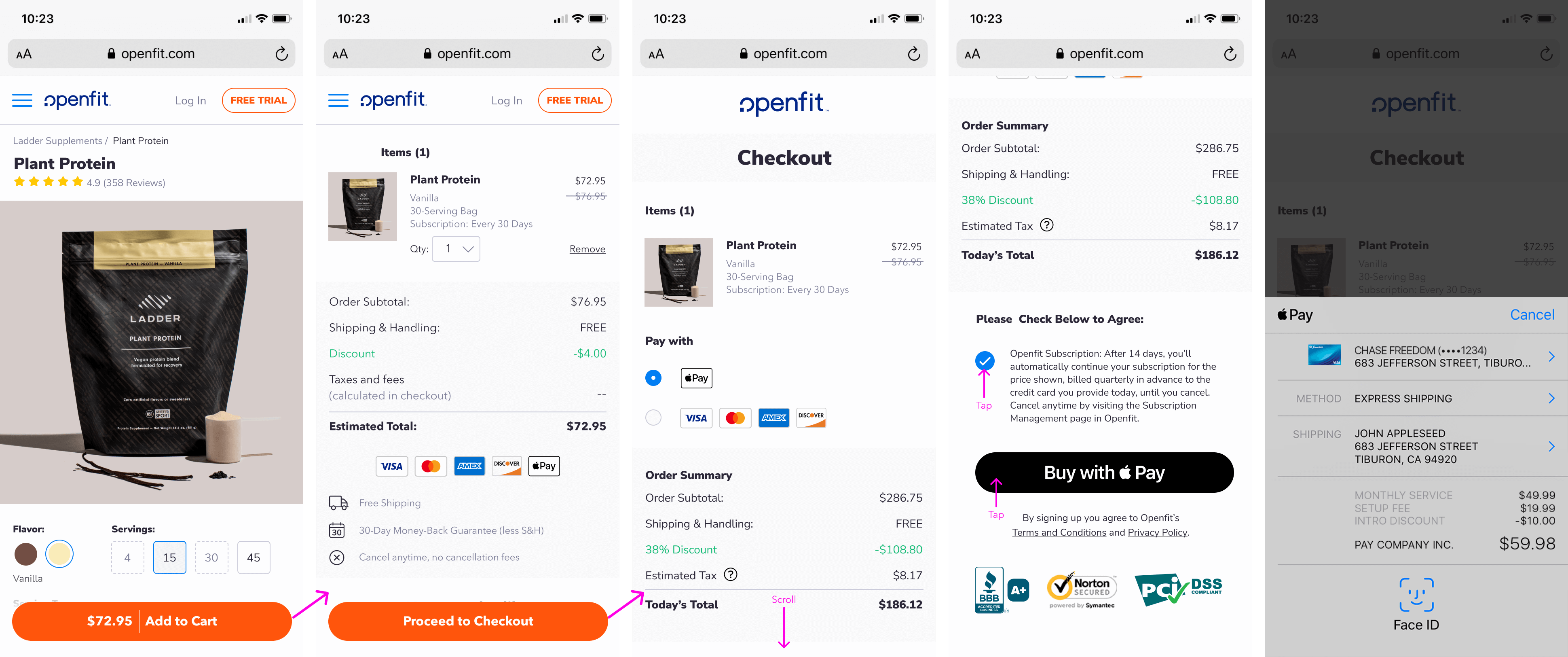
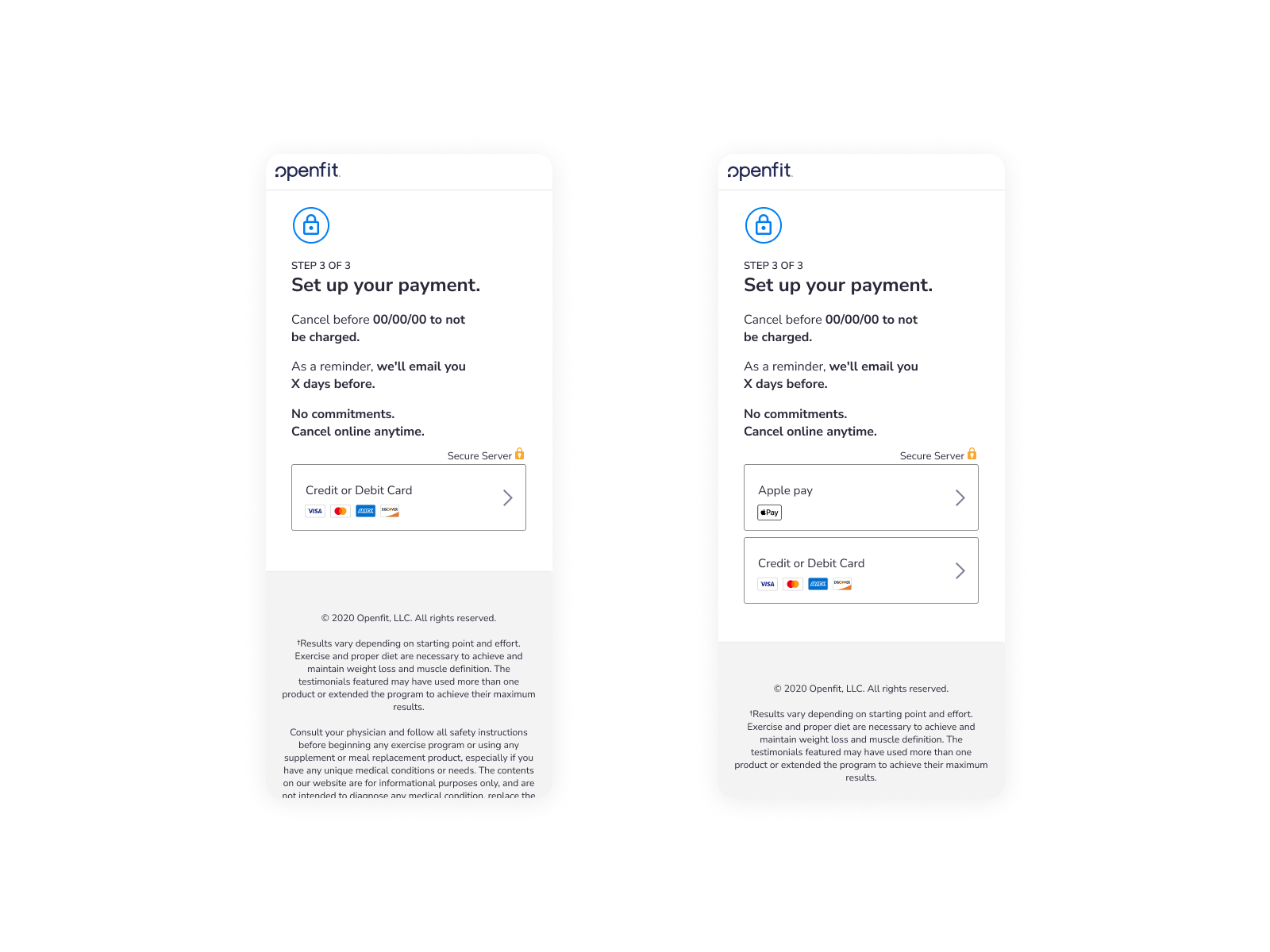
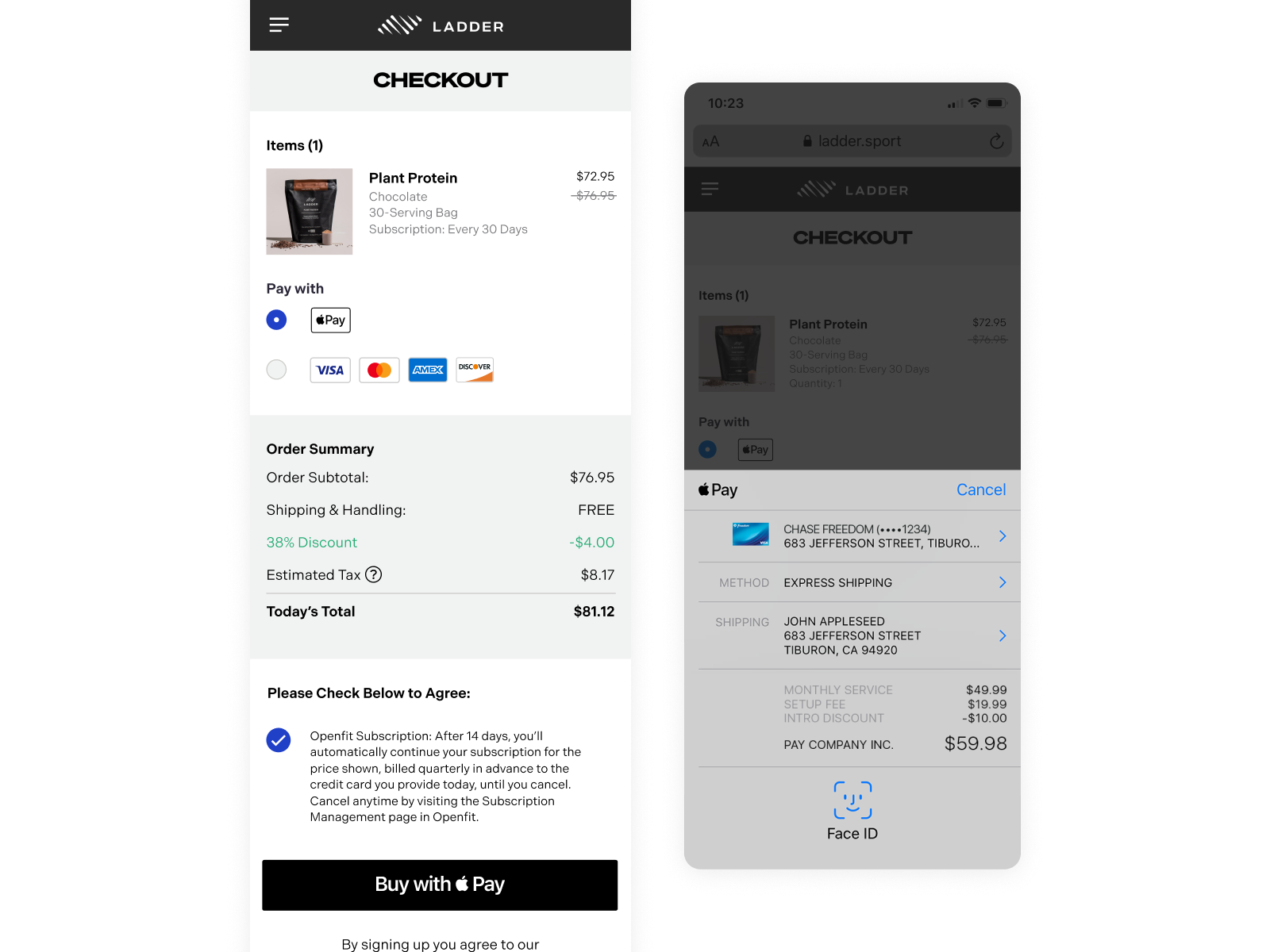
For checkout, I designed two variants for simultaneous A/B testing. Variant 1 bet on speed — streamlined Apple Pay, single-tap payment injected directly into the cart. Variant 2 bet on choice — expanded payment options including PayPal, digital wallets, and credit card alongside Apple Pay.
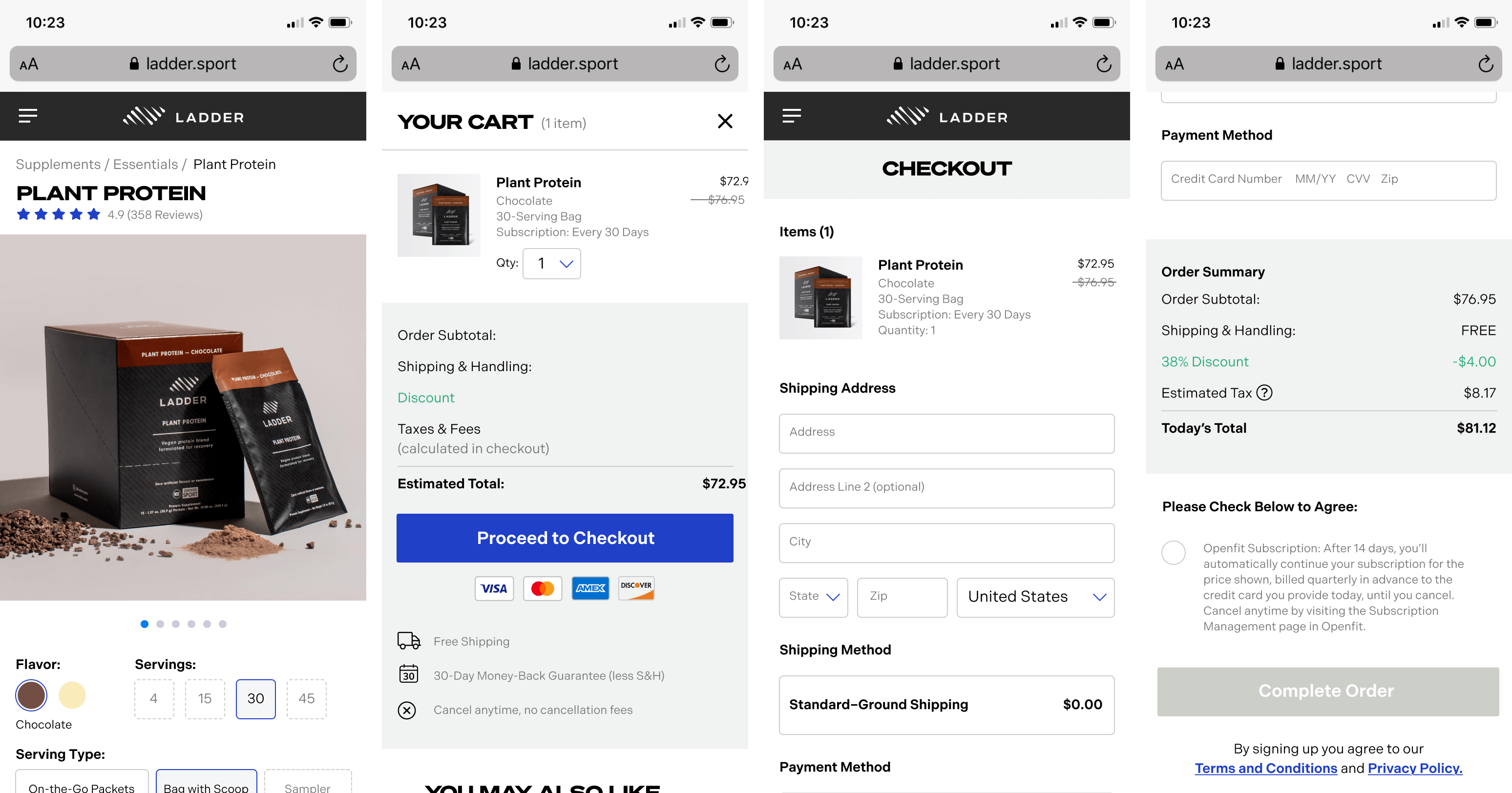
Before designing either variant, I audited the current checkout flow by counting every click required to complete a purchase on both Openfit and Ladder.com. That click audit became the baseline for measuring whether each variant actually reduced friction.
What the Test Revealed
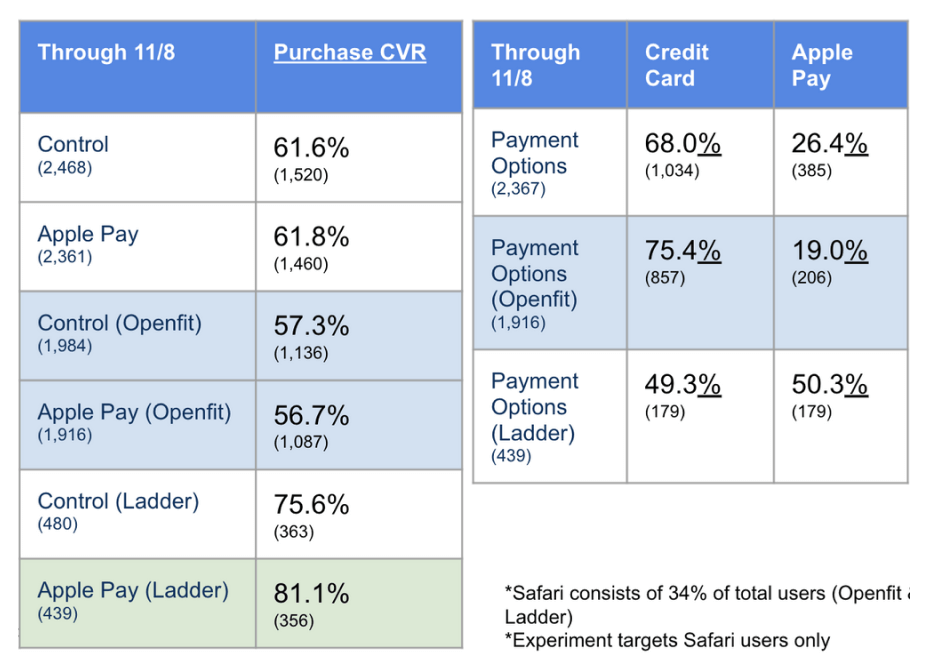
Option breadth beat speed. Variant 2 — the expanded payment options — outperformed Apple Pay alone by 8% on Ladder.com. The insight: at the moment of purchase, users want to feel in control of how they pay. Reducing their options, even to a faster one, increased friction rather than reducing it.
A checkout built on what users actually want. A retention moment built on timing.
Variant 2 became the primary checkout experience across Openfit and Ladder.com. The expanded payment options flow was refined for clarity and speed — option variety without complexity.
The cancel-prevention flow was designed as a single intentional screen, surfaced at the exact moment a user initiated cancellation. It led with the value most relevant to their subscription tier, offered a meaningful alternative to full cancellation, and gave users a frictionless path back into the product if they chose to stay.
33% less churn. 8% more conversions. Both validated before rollout.
These weren't projected numbers. Both initiatives ran through controlled A/B tests before full rollout — which meant the results reflected real user behavior, not optimistic modeling. At subscription scale, an 8% CVR lift compounds meaningfully over time.
Next Project
Stockvu · 2020–2023
Stockvu
Built a financial literacy tool for underrepresented investors.