Personal Project · 2026
Squads

I wanted to learn how to build — so I built something real
Squads is a personal upskilling project that turned into a real product concept. I wanted to understand what it actually takes to go from a product idea to a working application — not just design it in Figma, but build it. That meant learning how to work with AI coding tools, think through backend architecture, and make product and engineering decisions simultaneously.
The product is a sports discovery and venue management platform. Players find pickup games. Organizers run ticketed events. Venues manage their entire operation from one place. The idea is grounded in a real business gap — but the build itself was the education.
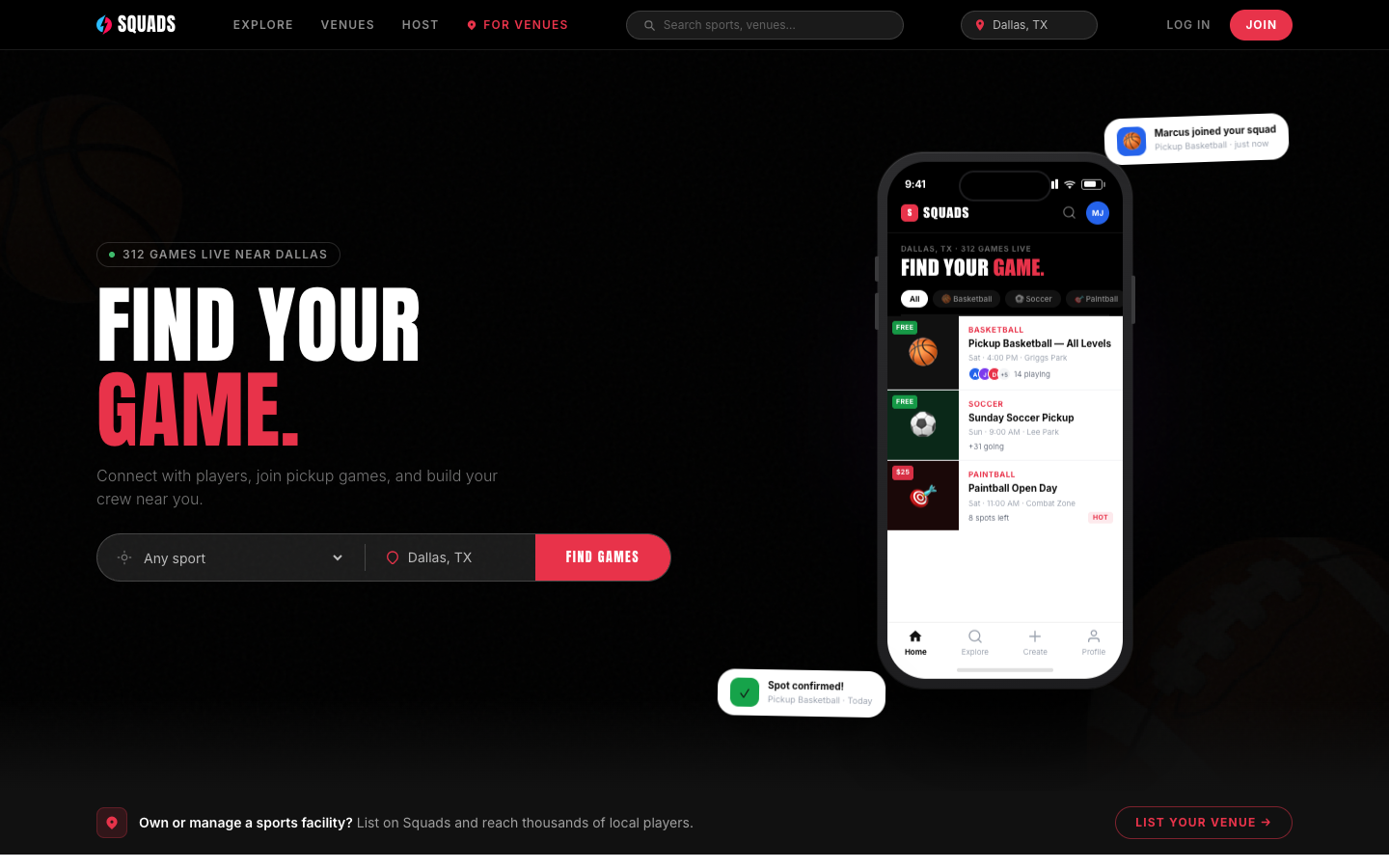
247 million active Americans — and no great way for venues to reach them
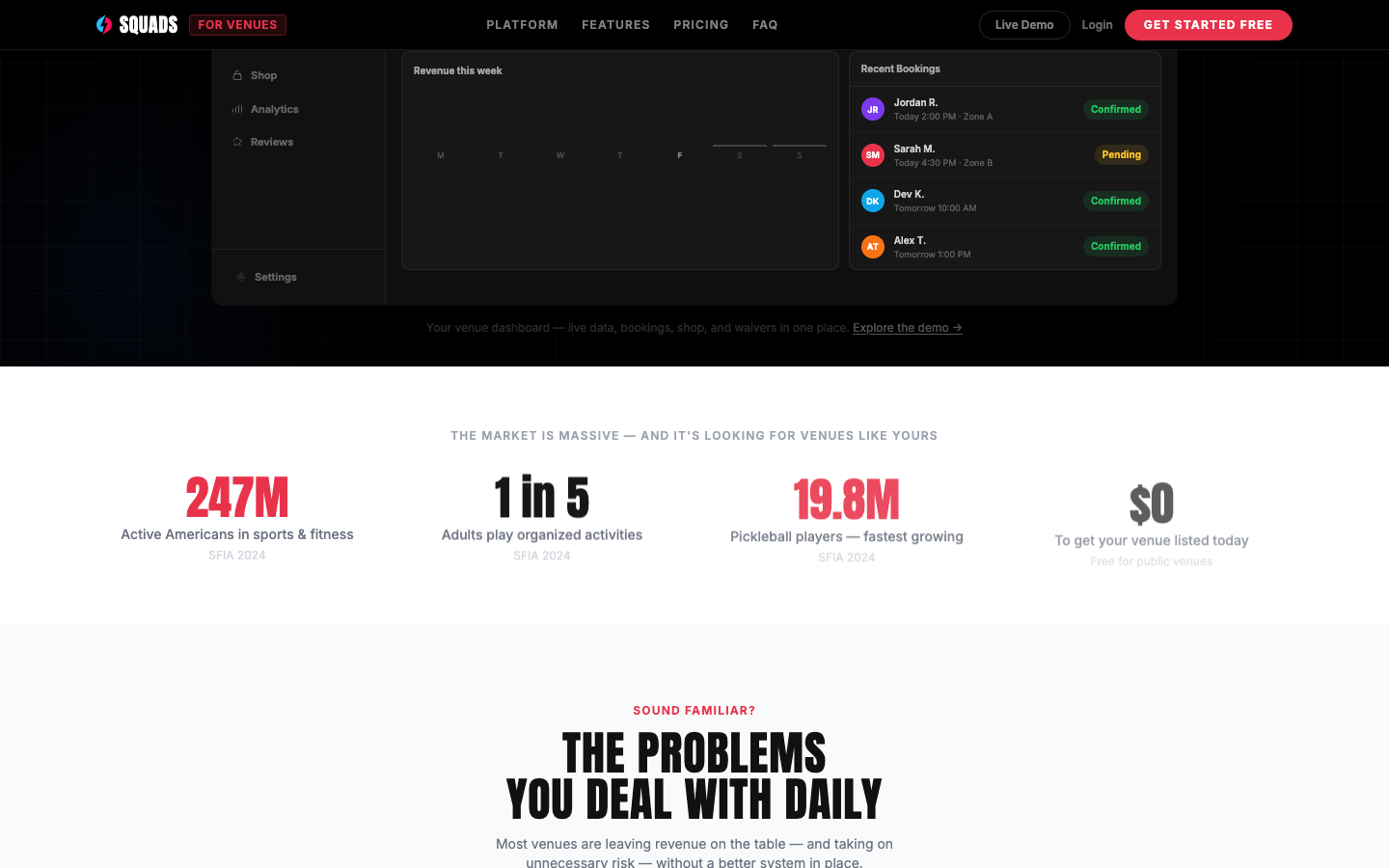
Sports venues — paintball arenas, soccer complexes, MMA gyms, tennis clubs, rec centers — are running at 55–60% average utilization. The demand exists. The gap is infrastructure. Most venues today rely on 4–6 separate tools: one for booking, one for waivers, one for check-in, one for CRM. None of them talk to each other, none of them help venues reach new players, and all of them cost money individually.
On the player side, the problem is discovery. There's no Yelp for pickup games. Finding a basketball run near you, at the right skill level, on a Tuesday night, requires knowing someone who knows someone. Squads is the layer between demand and supply that doesn't exist yet.
Venues are losing time, money, and players to tools that weren't built for them
"Most venues use 4–6 separate tools for booking, waivers, check-in, and CRM. None of them talk to each other. None of them help fill capacity."
The three pain points venues told me about most:
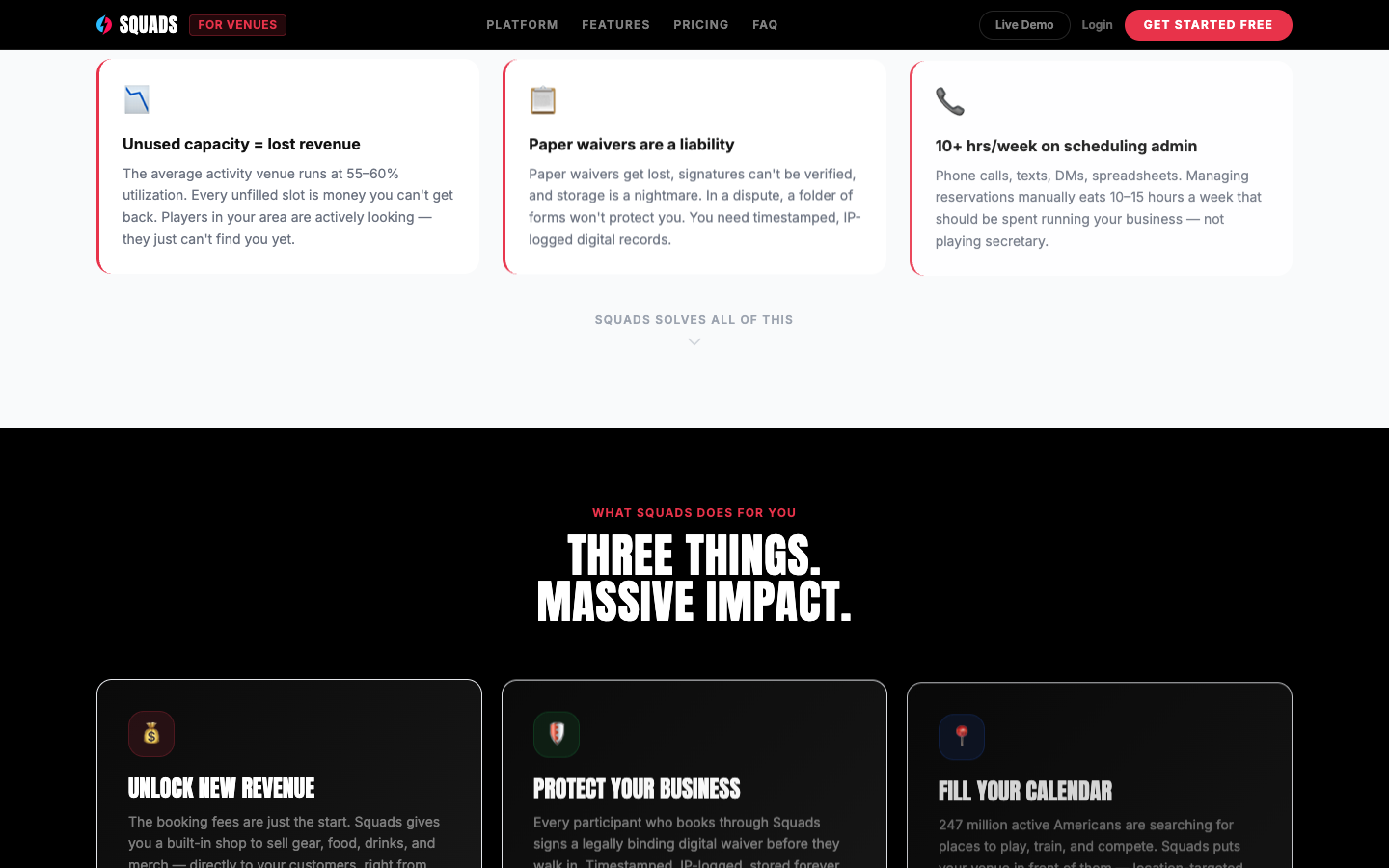
Unused capacity bleeds revenue — the average sports facility runs at 55–60% utilization. Every empty timeslot is lost money with no mechanism to recover it.
Paper waivers are a liability — unverifiable, untrackable, legally risky. And when something goes wrong, there's no audit trail.
10–15 hours a week on scheduling admin — managing bookings manually, chasing confirmations, handling cancellations. Time that should go to operations.
Three tiers built around three completely different users
Squads is a three-tier platform. Each tier is a different product, serving a different user, with a different business model behind it.
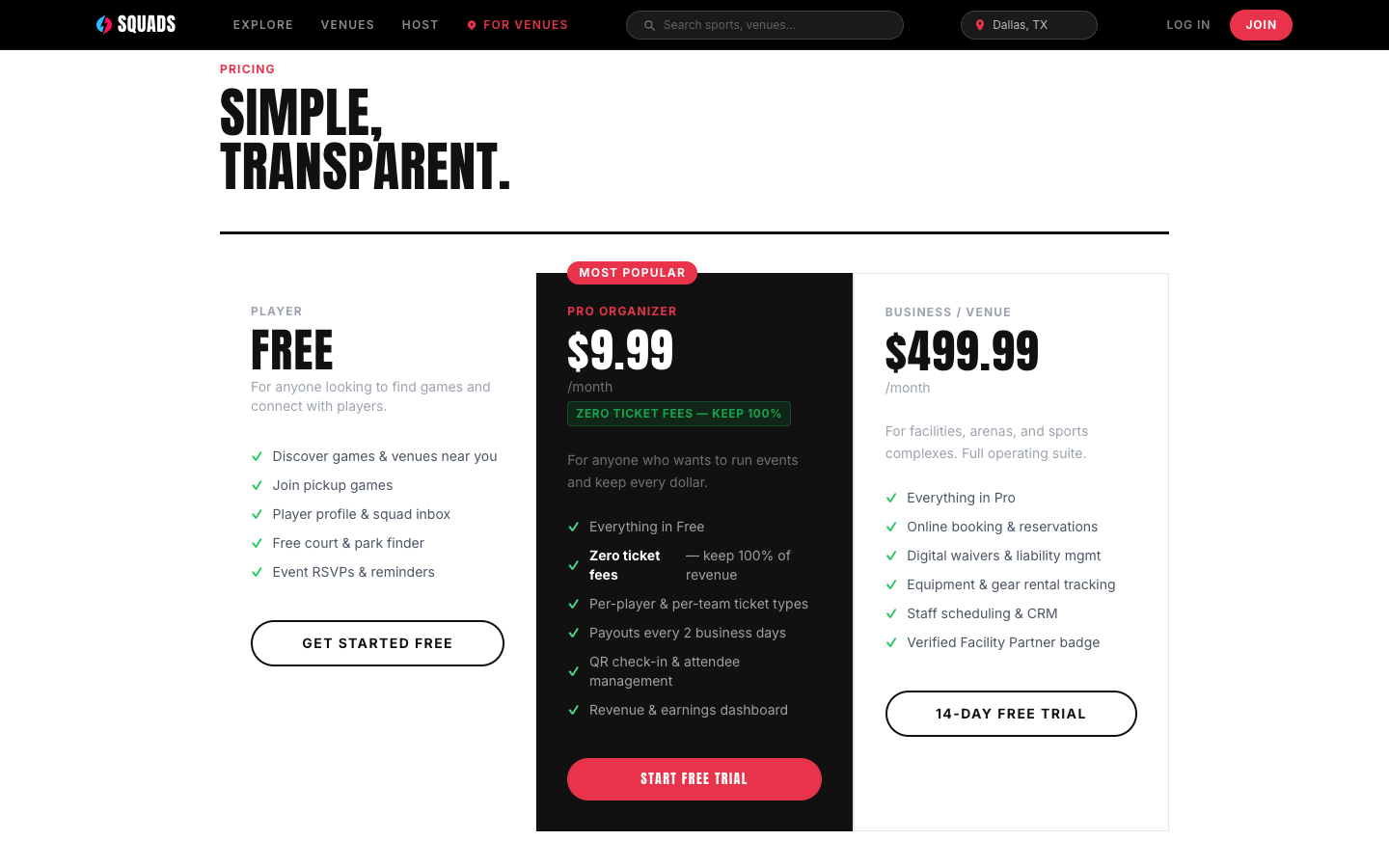
The Player tier is free. Discover pickup games filtered by sport, location, skill level, and price. Join events, build a profile, message other players. The discovery layer uses real court and park data so players can find both informal games and organized events.
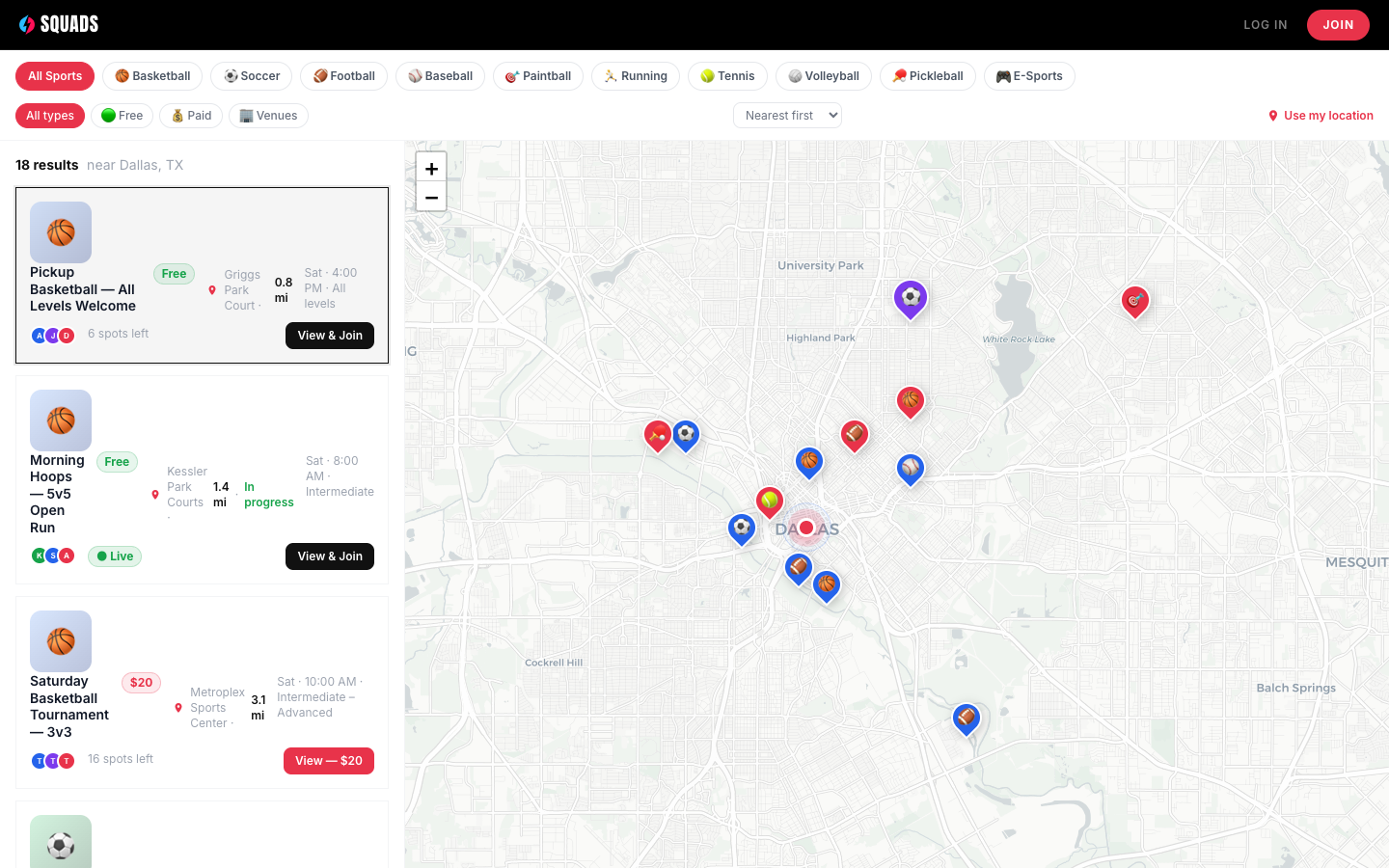
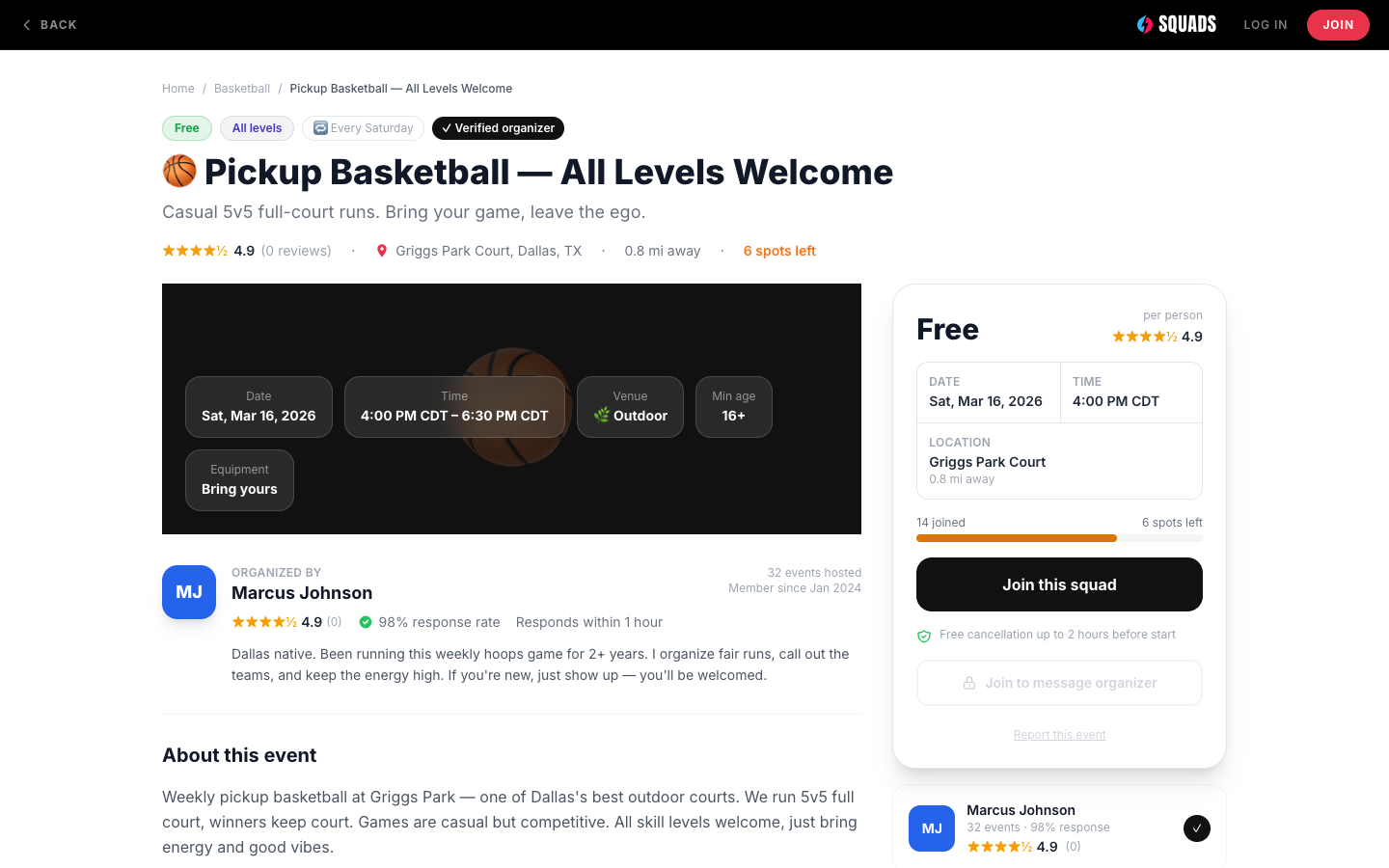
The Pro Organizer tier ($9.99/month + transaction fee) is for anyone running ticketed events — community organizers, coaches, trainers. Set prices per player or per team, manage RSVPs, use QR check-in at the door, and track payouts through Stripe Connect. The revenue dashboard shows earnings, attendance, and event performance over time.
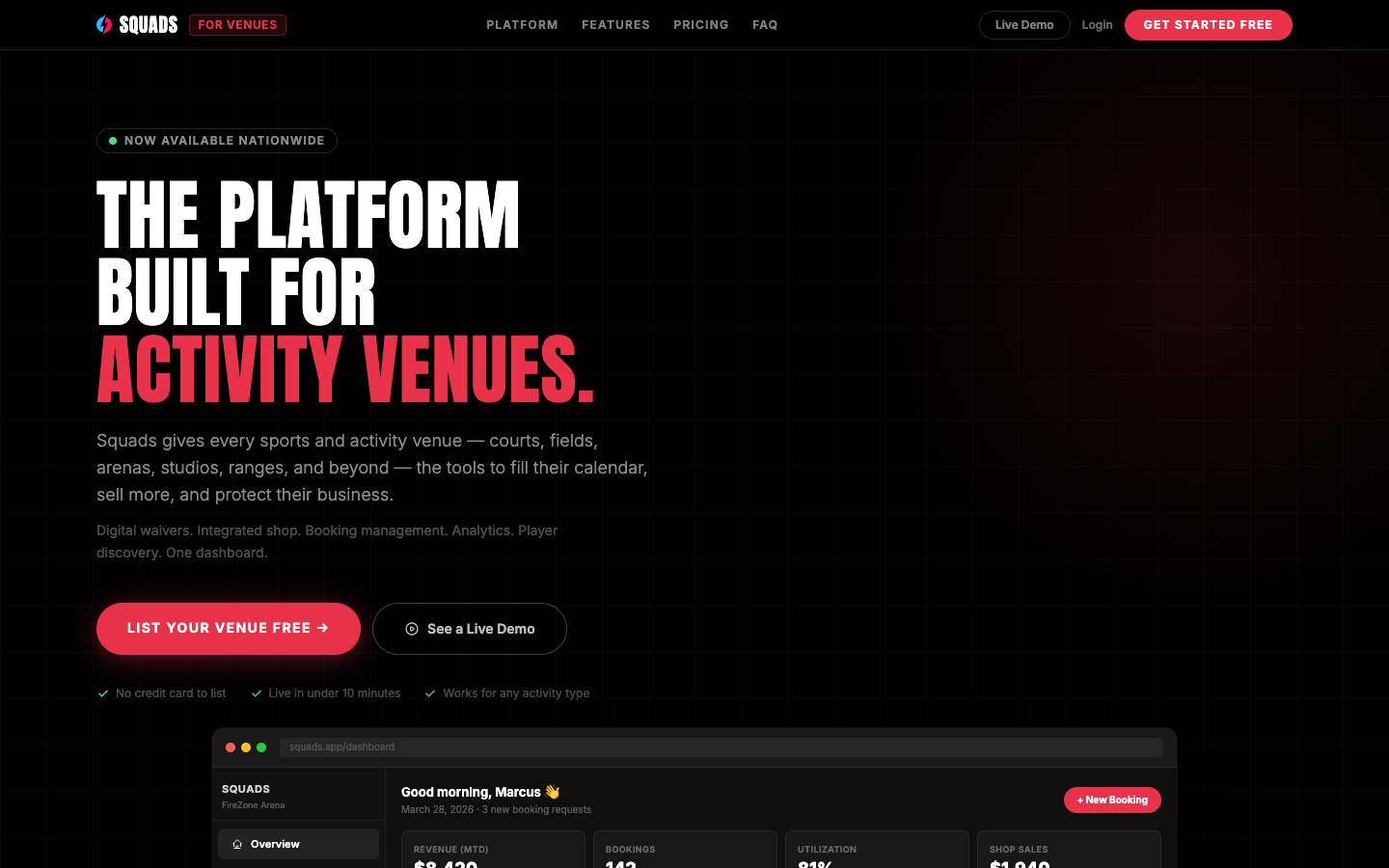
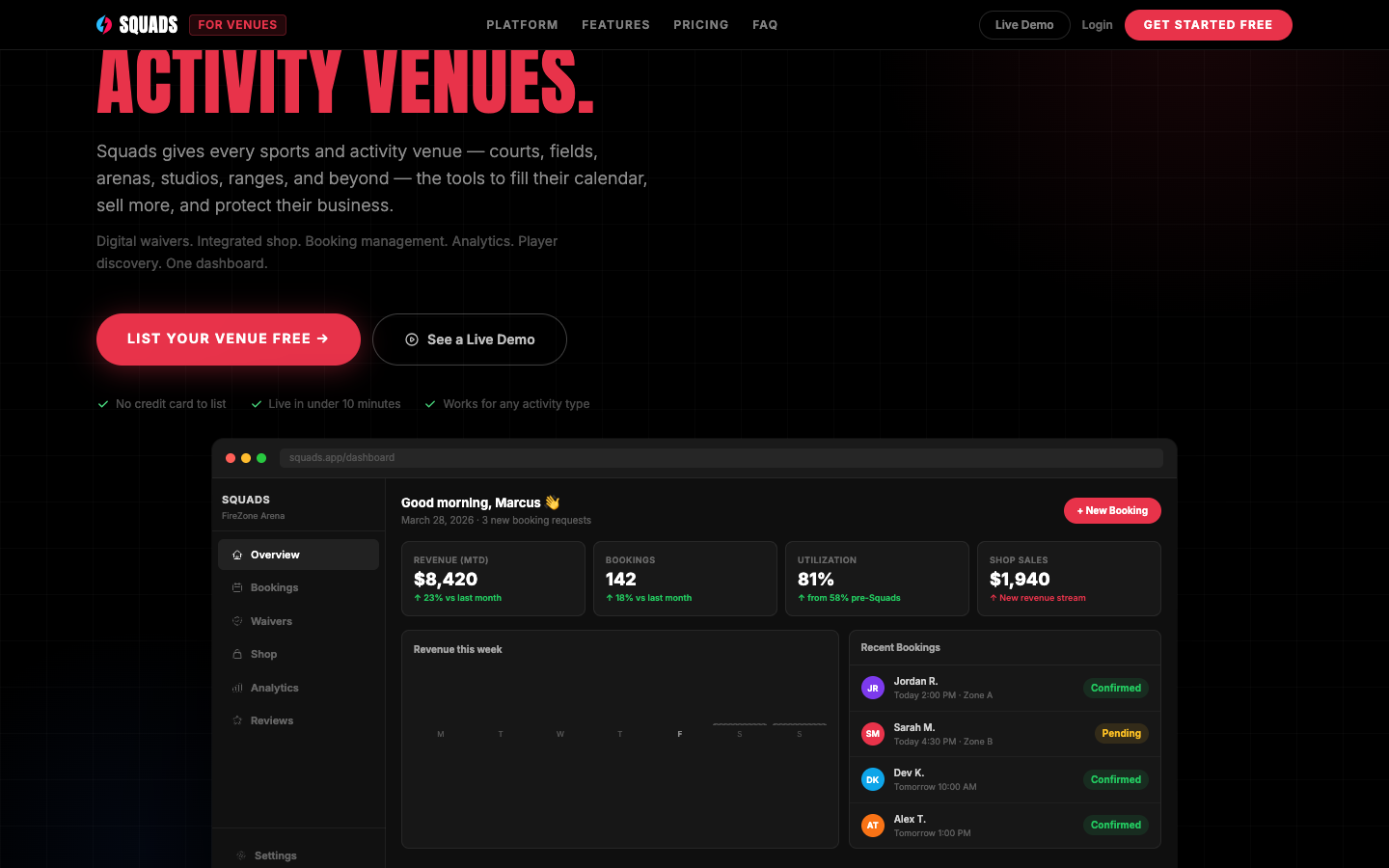
The Business tier ($499.99/month) is the full venue operating suite. Booking management, digital waivers with E-SIGN compliance, integrated shop for gear and concessions, analytics, staff scheduling, CRM, and marketplace listing. The pitch to venues is consolidation: one subscription replaces six separate tools.
What vibe coding actually taught me about product thinking
I built Squads using Claude Code and Antigravity IDM as my primary development tools — working iteratively, describing what I wanted, reviewing the output, and learning from what the AI generated as much as from what I directed.
The discovery: AI-assisted development doesn't remove the need for product thinking. It amplifies it. Vague prompts produced vague code. Precise product decisions — clear user intent, defined data models, explicit edge cases — produced precise implementations.
"The skill I was developing wasn't coding. It was learning to hold the user experience and the system architecture in mind at the same time."
Building Squads required me to think like a designer and an engineer simultaneously. Every screen decision had a data implication. Every feature had a schema consequence. When I decided organizers should see a revenue chart, I had to think: what data is stored, in what shape, queryable how?
That feedback loop — from design decision to database implication to UI state — is something you can't fully experience from Figma alone. The build process was the education.
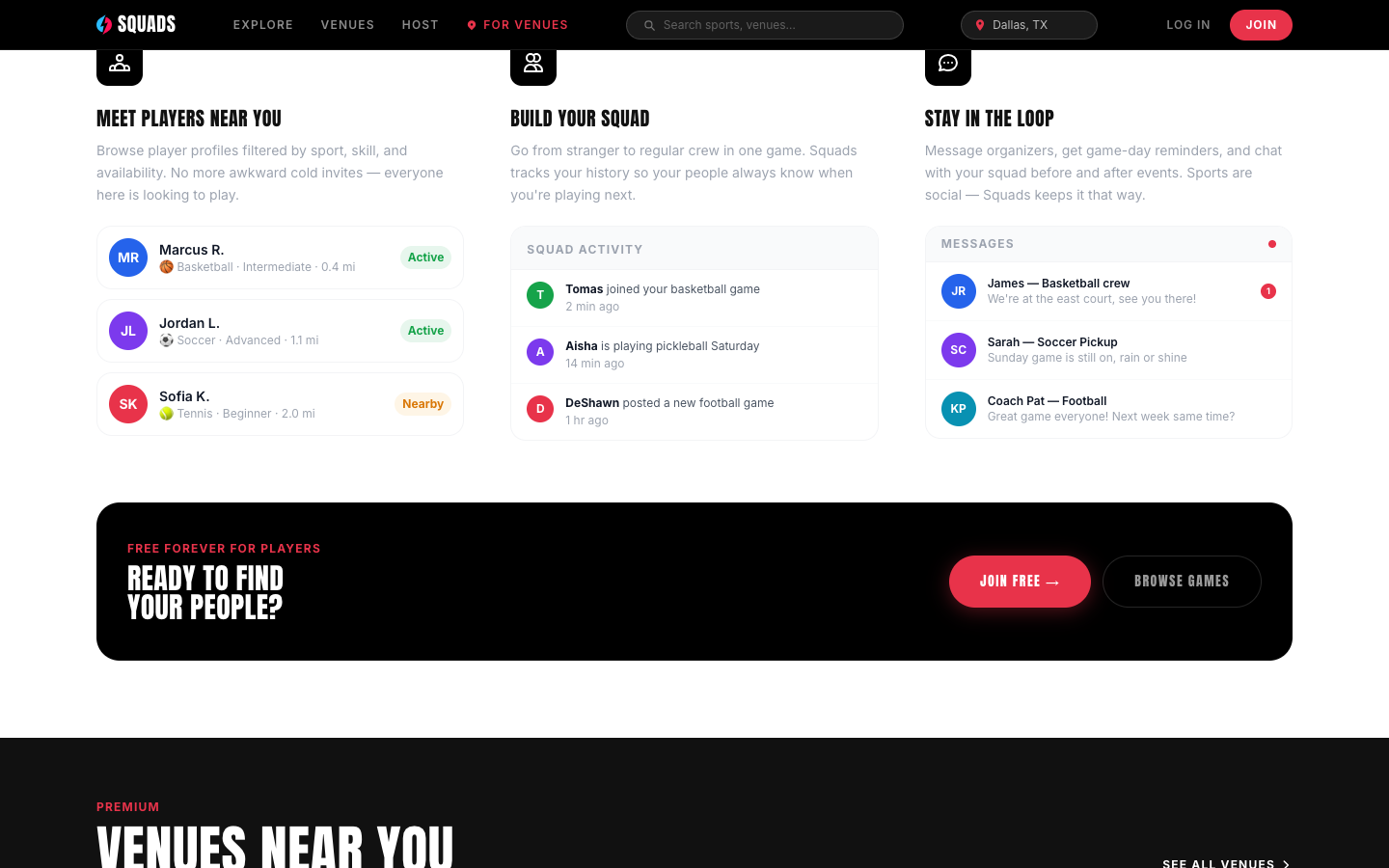
Supabase, Stripe Connect, and a backend that taught me to think in schemas
The stack was chosen to stretch what I knew. HTML, CSS, and Tailwind for the frontend — keeping it simple to move fast. Supabase as the backend: auth, database, and real-time features without spinning up a separate server. Stripe Connect for the Pro Organizer payout flow, which required understanding how marketplace payments work — platform fees, connected accounts, payout scheduling.
Every backend decision had a design implication I hadn't anticipated before building:
Supabase's row-level security shaped what data each user tier could see — and meant I had to think about access roles during schema design, not after.
Stripe Connect's payout structure shaped when and how organizers could access their earnings — which affected what I showed in the dashboard and when.
The waiver system needed E-SIGN and UETA compliance, which meant storing IP addresses, timestamps, and signature data — all of which had to be surfaced to venues in the right way.
The next step is the room — pitching venues directly
Squads is a concept that's earned a working prototype. The next phase is real-world validation: pitching directly to sports venues — soccer complexes, MMA gyms, paintball arenas, tennis clubs, rec centers — to test whether the consolidation value proposition lands with the people who actually run these businesses.
"The pitch is simple: you're paying for six tools. This is one."
Beyond the venue pitch, the player-side discovery experience needs real location data and real organizers to become genuinely useful. The next build phase involves connecting the two sides of the marketplace — getting venues listed, getting organizers creating events, and getting players to show up.
The design work and the build work both exist to make that conversation credible.
Next Project
Capital One · 2025
Solution Finder & Presentment
Doubled CTR on a hardship flow.
