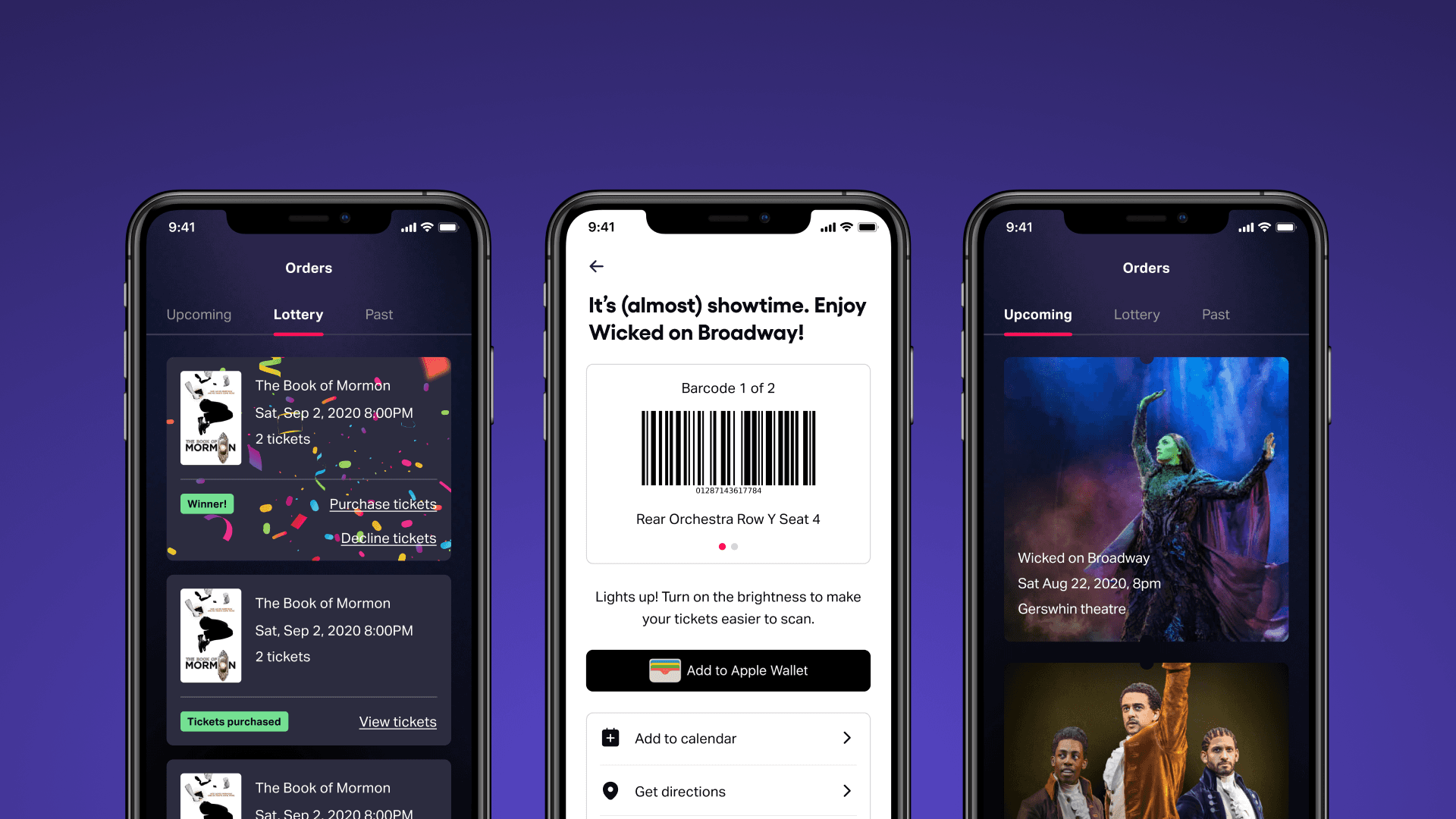
TodayTix · 2022
Ticket Relisting

Unused tickets were a silent problem for buyers and TodayTix both.
When customers bought tickets they couldn't use, their only options were eating the cost, trying to sell manually, or dealing with third-party resale sites with price gouging risks. TodayTix had no native mechanism to handle this — everything went through customer support.
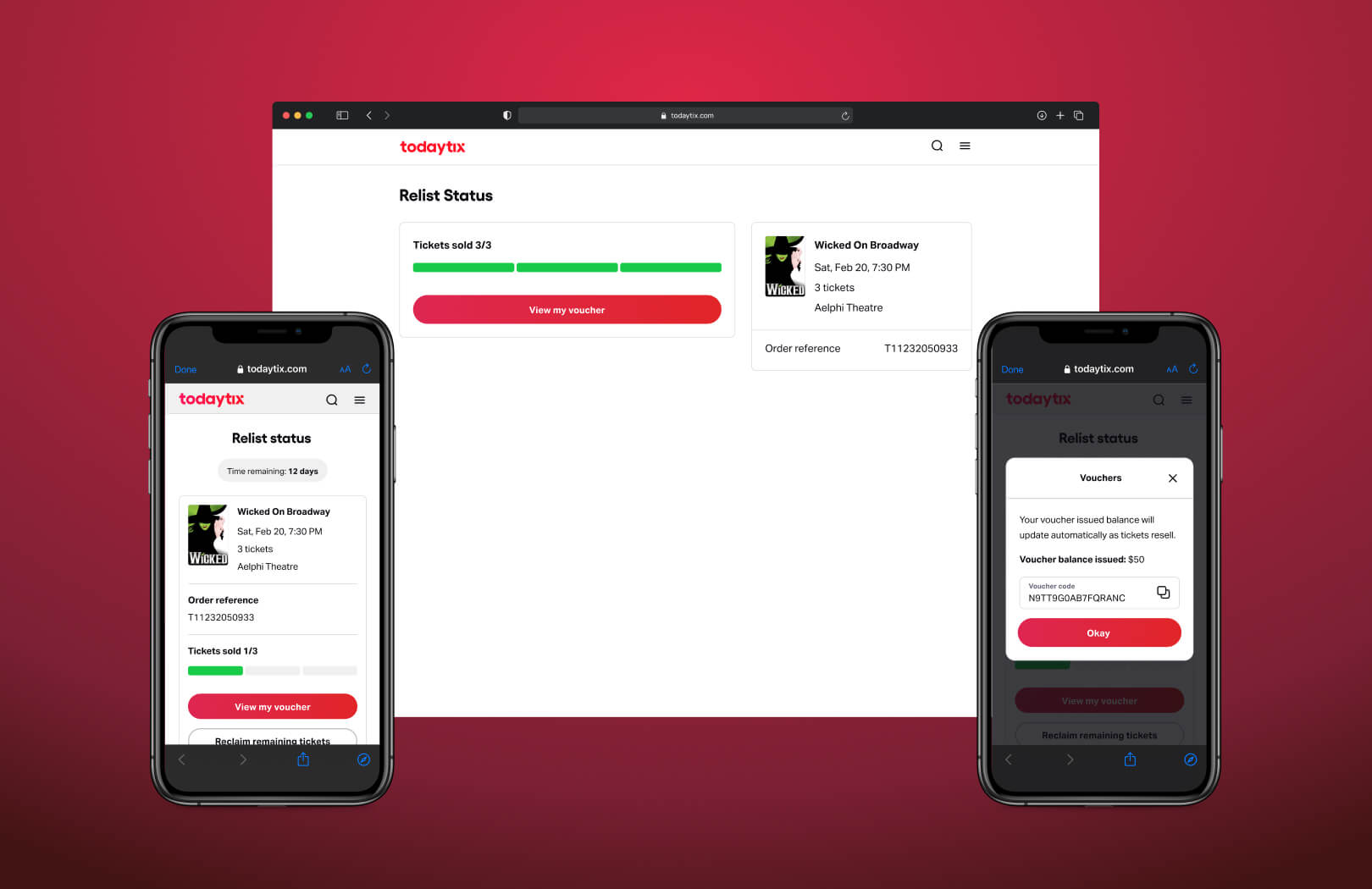
The relisting initiative set out to change that: a branded, self-serve resale feature that let customers recoup their cost, gave buyers access to otherwise unavailable tickets, and helped TodayTix fill seats that would have otherwise gone empty.
Four personas. One consistent pain: uncertainty.
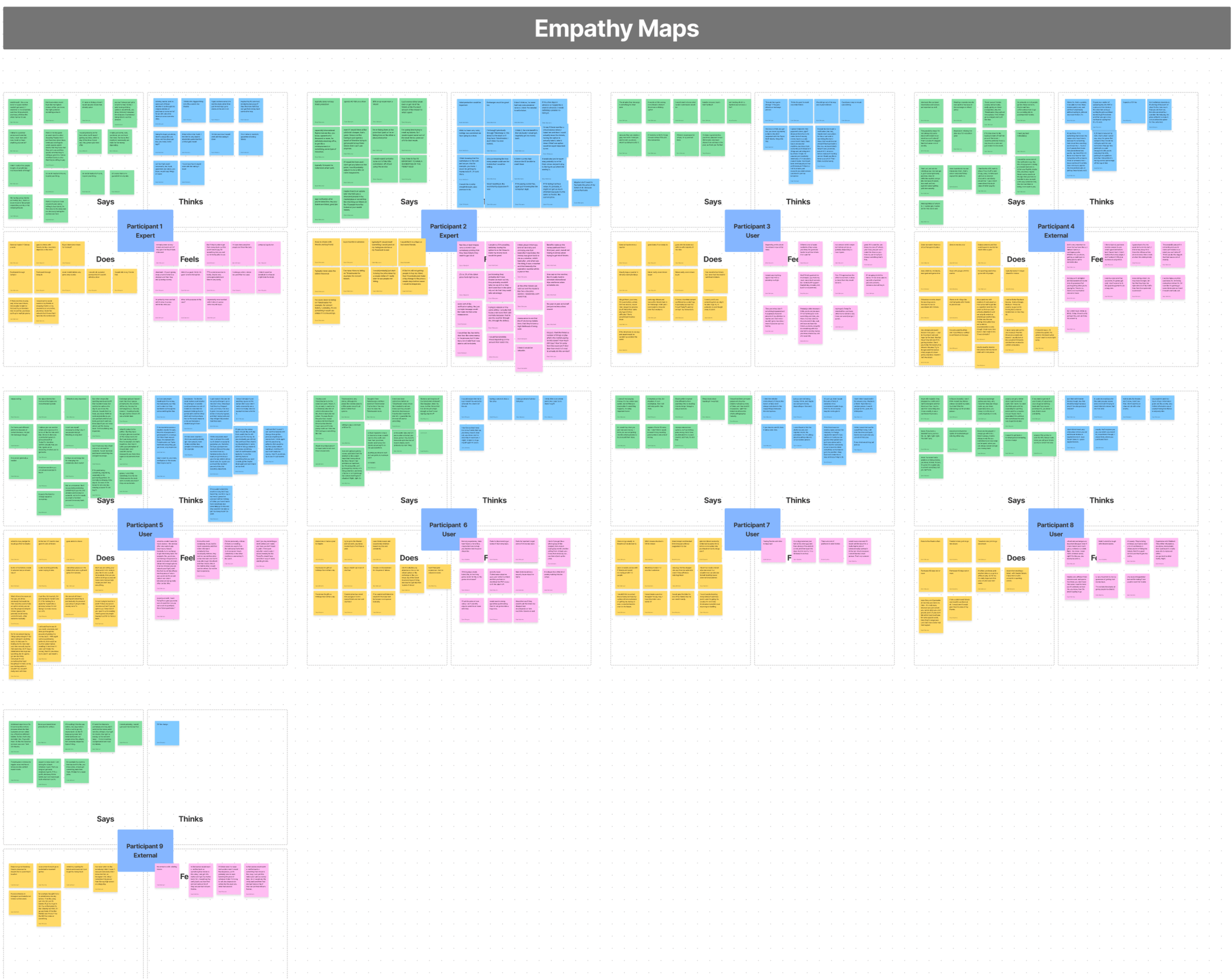
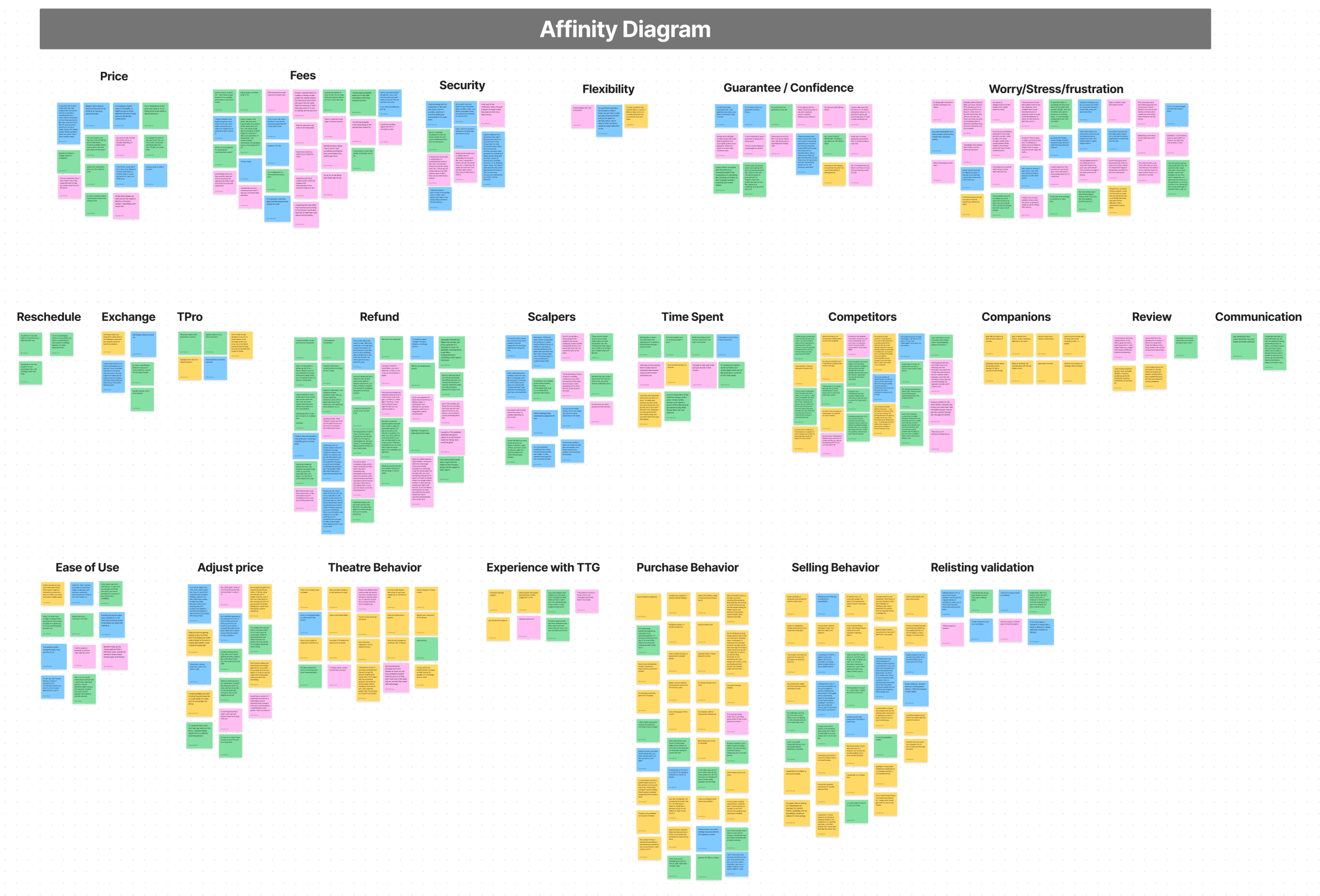
I started with user research targeting customers who had been unable to attend events they'd purchased tickets for. The research goals were focused: understand the pain around reselling without guarantees, gauge trust levels for an in-app feature, and identify what information would actually change purchasing behavior.
Interview data was synthesized into empathy maps and affinity diagrams before being distilled into four personas that captured the range of behaviors, motivations, and comfort levels in the user base.
The core design question: how do you communicate chance without killing confidence?
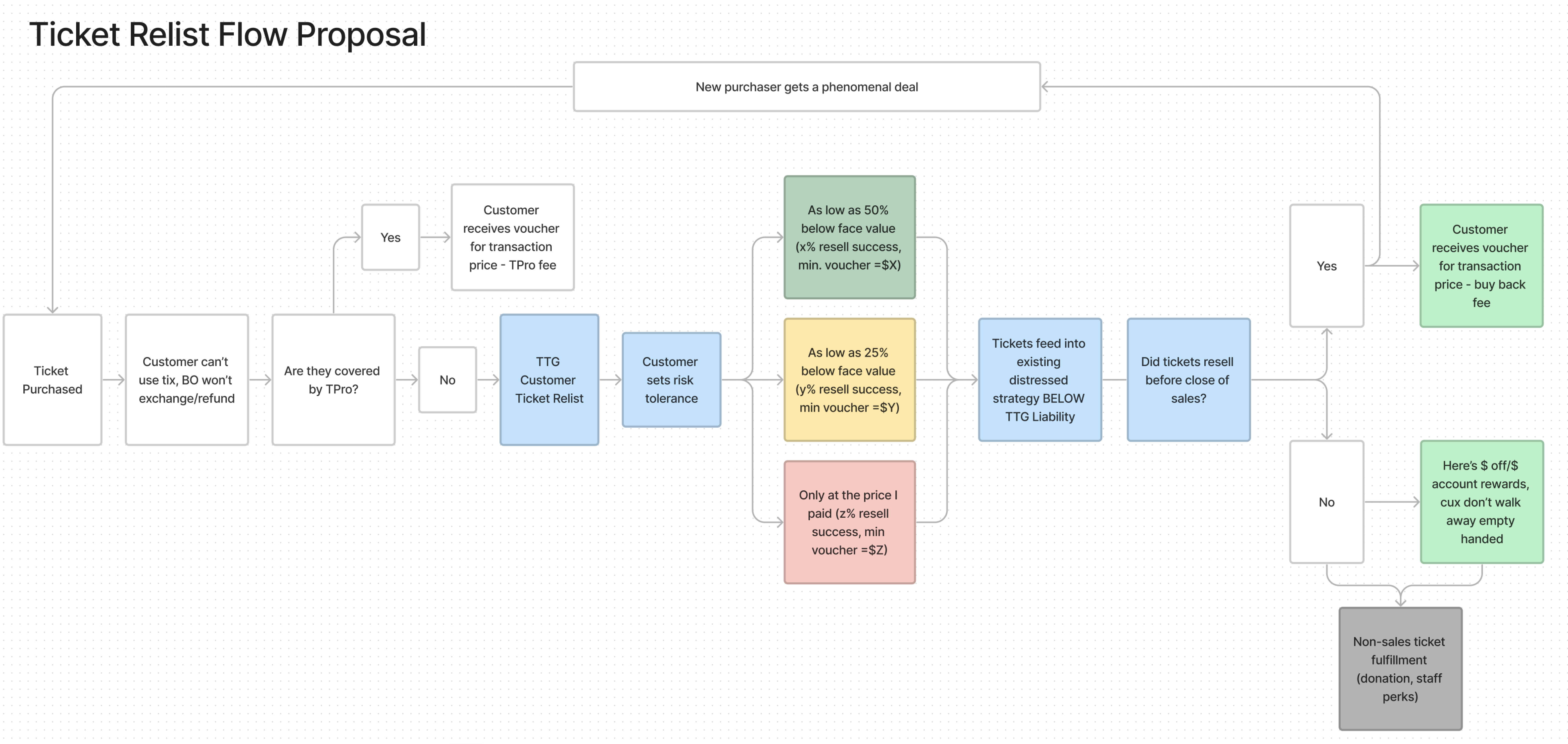
The hardest design question wasn't the UI — it was the framing. Relisting isn't guaranteed resale. There's a chance the ticket sells, not a promise. My concern was whether being honest about that uncertainty would deter users from listing at all. I mapped the full journey and logic before touching wireframes.
The project was tabled. Then it came back — smaller, and stronger.
In March 2022, as the industry-wide AI pivot accelerated, the company redirected resources and the relisting feature was tabled. After months of research, ideation, and iterative refinement, watching the project pause felt like a setback.
"Witnessing the project being tabled felt like a setback — especially considering the passion and commitment I had put into crafting a solution I believed would bring immense value."
But the pause turned out to be productive. When the project was revisited months later with a reduced scope, the design work and research weren't wasted — they were a head start. Previous iterations, journey maps, and user insights shaped a faster, tighter implementation. The lean UX sessions and cross-functional work done during the original sprint made the return execution significantly smoother.
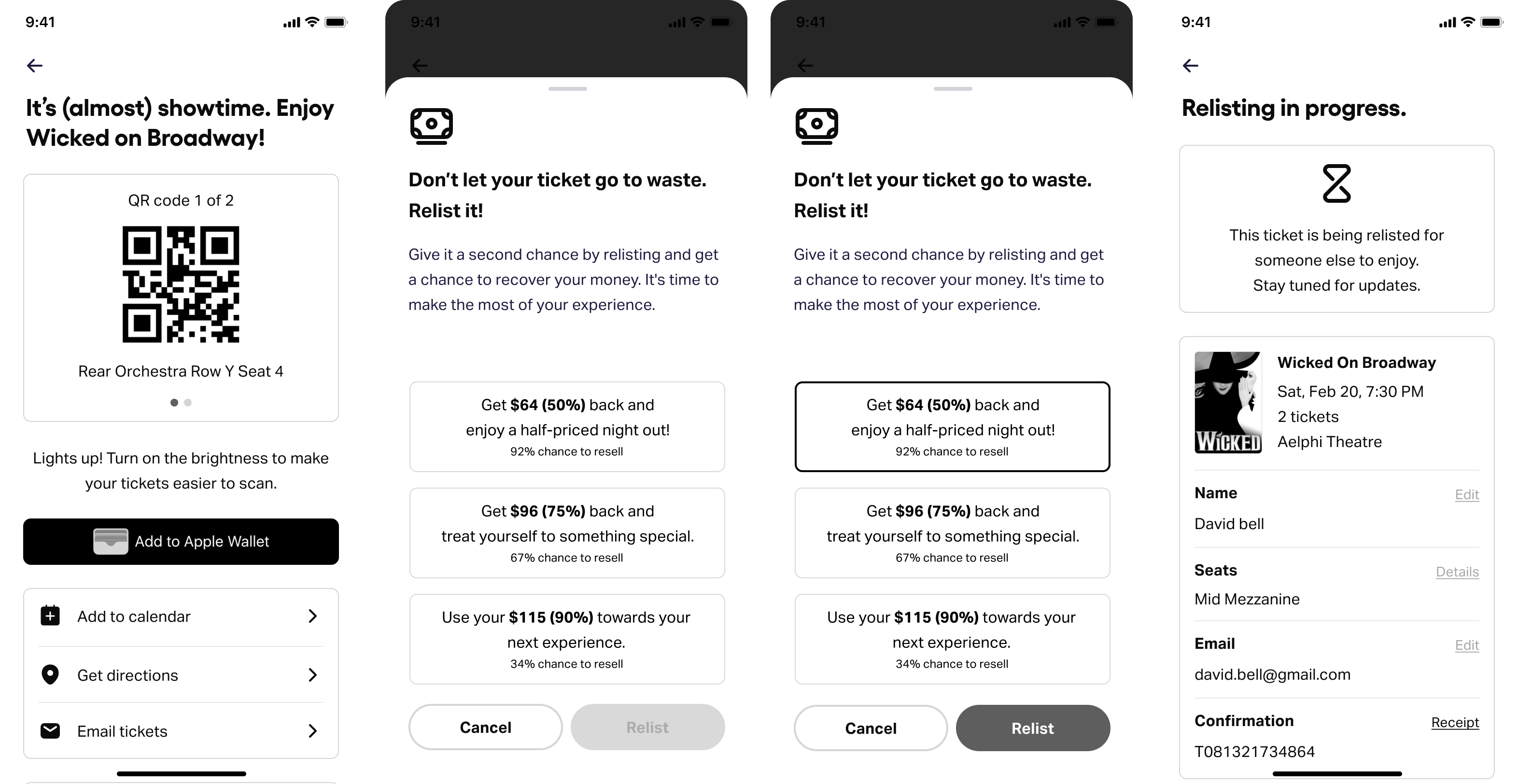
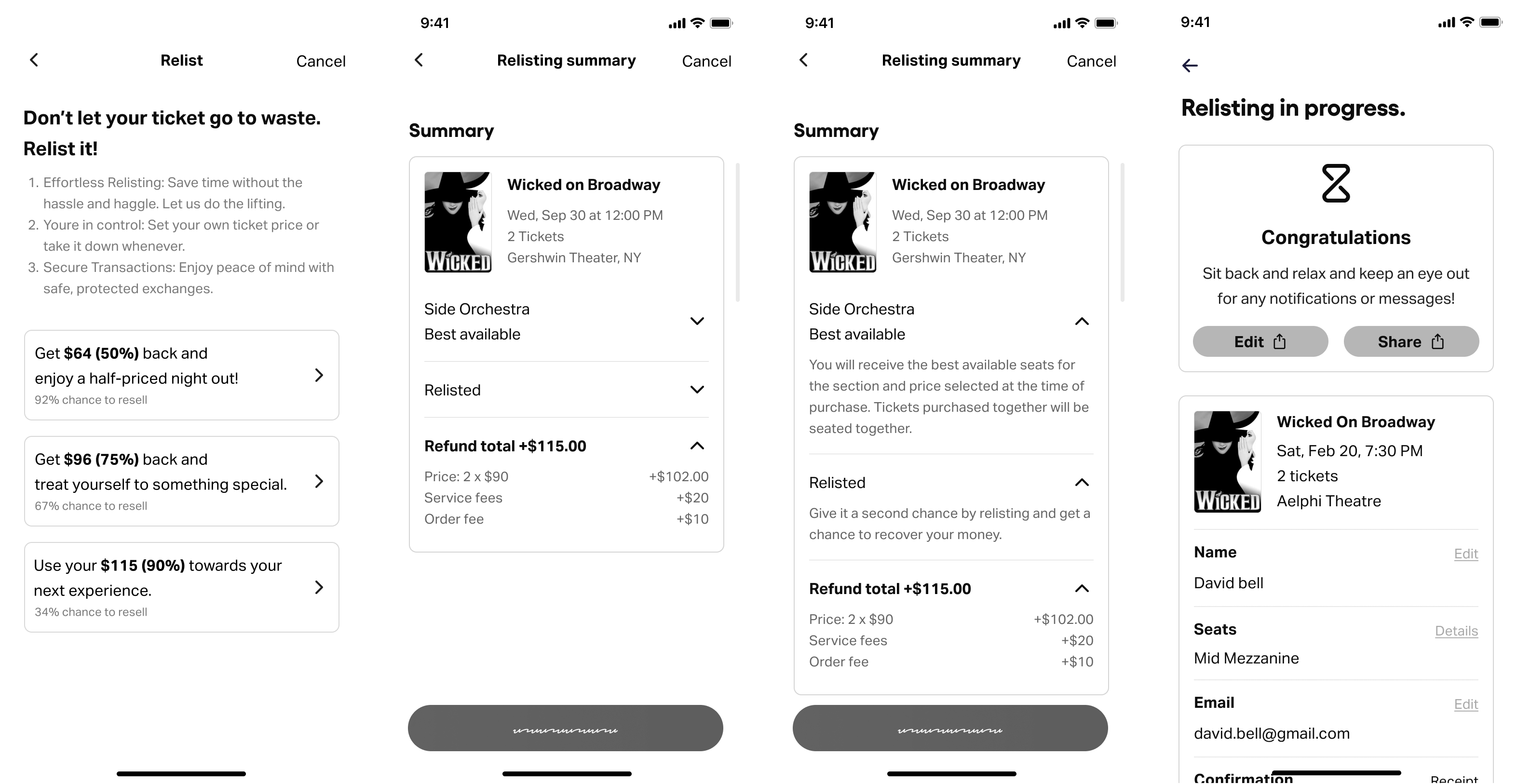
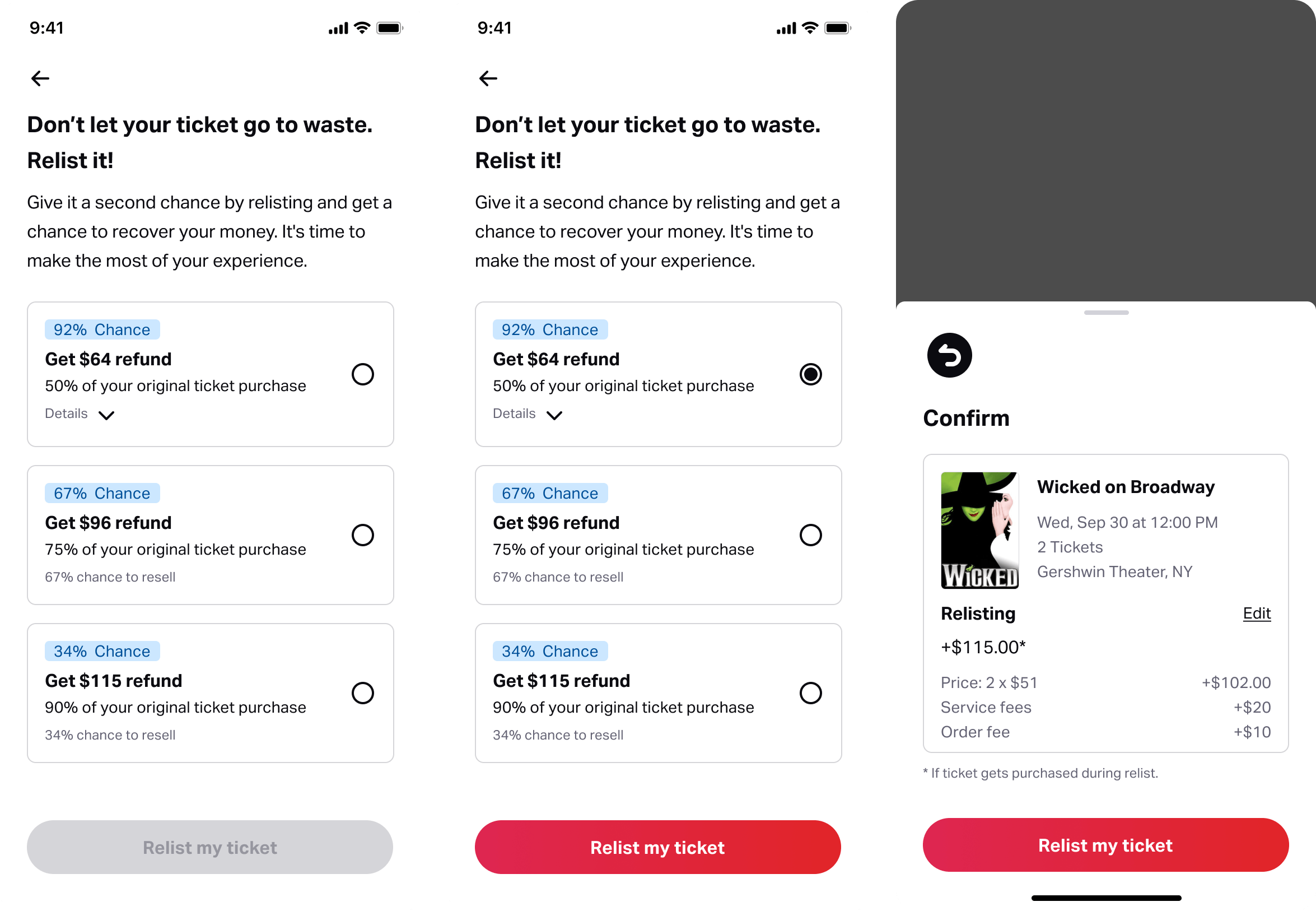
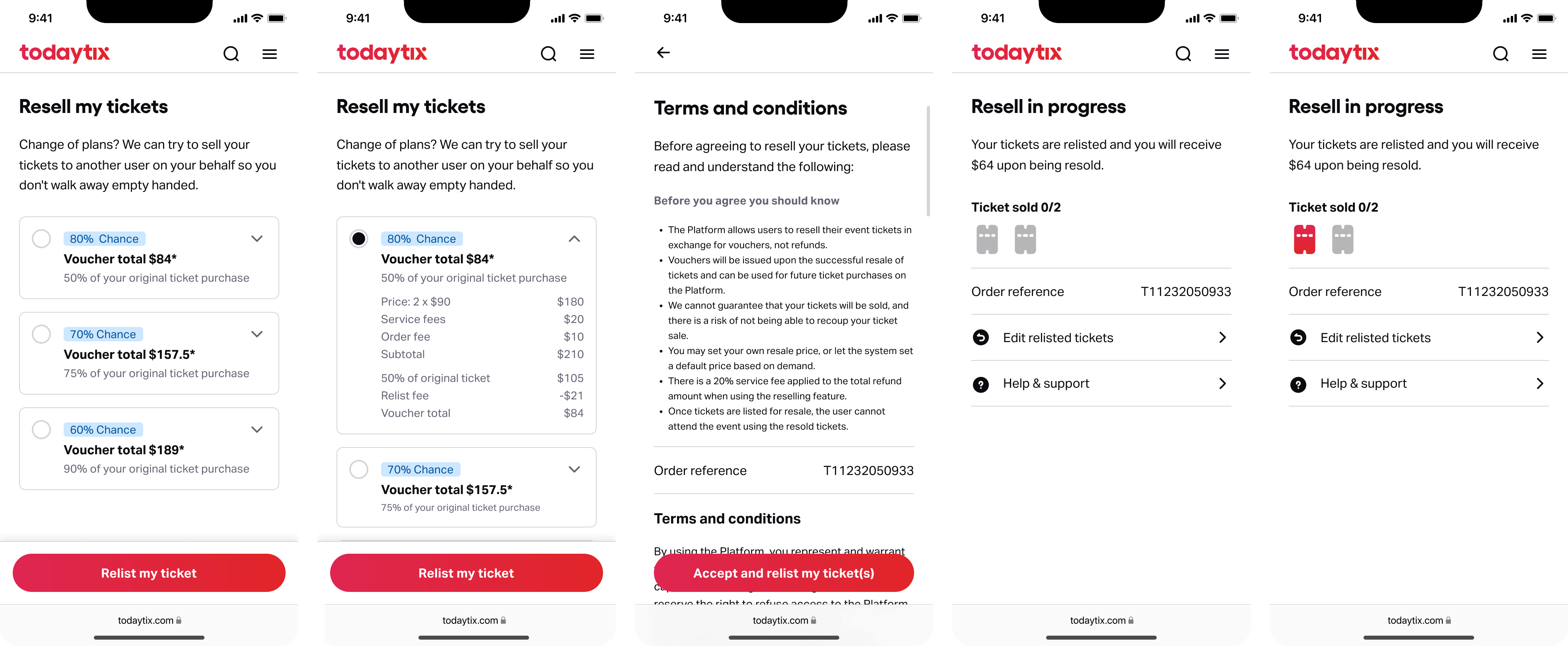
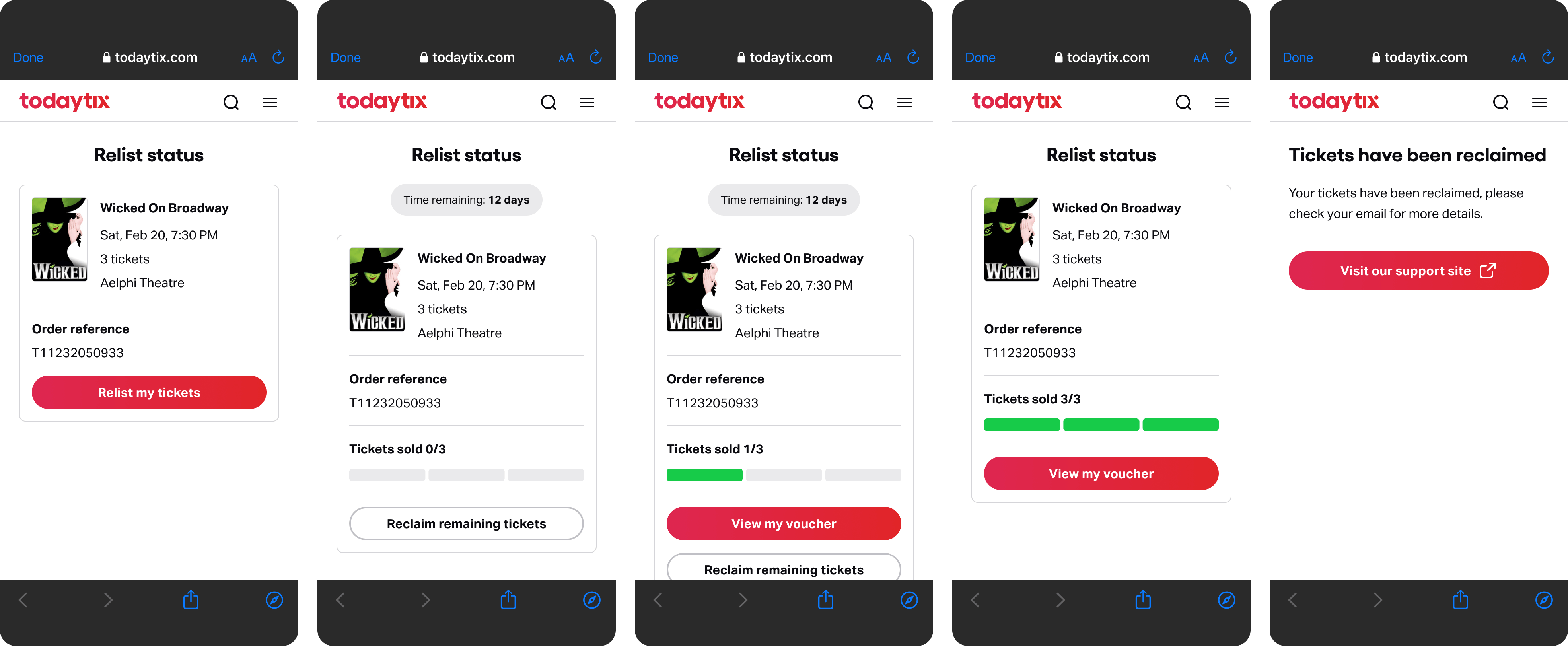

The final flow: clear, branded, and honest about how resale works.
What This Project Taught Me
Design work is never wasted when a project gets paused — it's invested. Every decision documented, every user insight synthesized, every iteration stress-tested became the foundation for a faster, better implementation when the project came back. Resilience in product design means holding your work lightly enough to adapt and tightly enough to protect what matters.
Next Project
TodayTix · 2022
My Orders
Reduced support load with a centralized ticket hub.